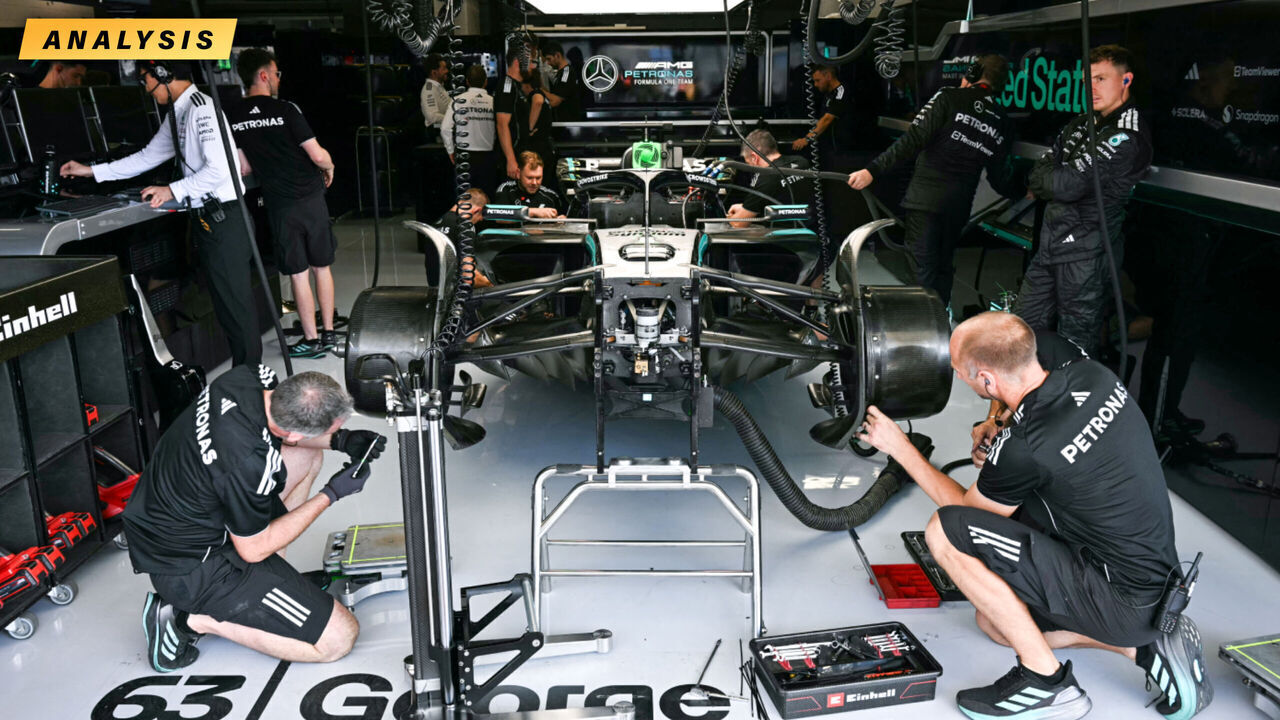
Three races with the new regulations have passed, giving the Formula 1 community an ample taste of the new cars. There have been some pleasant surprises, but the rules haven't come without their share of criticism. theScore's lead Formula 1 writer, Daniel Valente, will call fact or fiction on all the biggest complaints.
The need for driver skill has been reduced
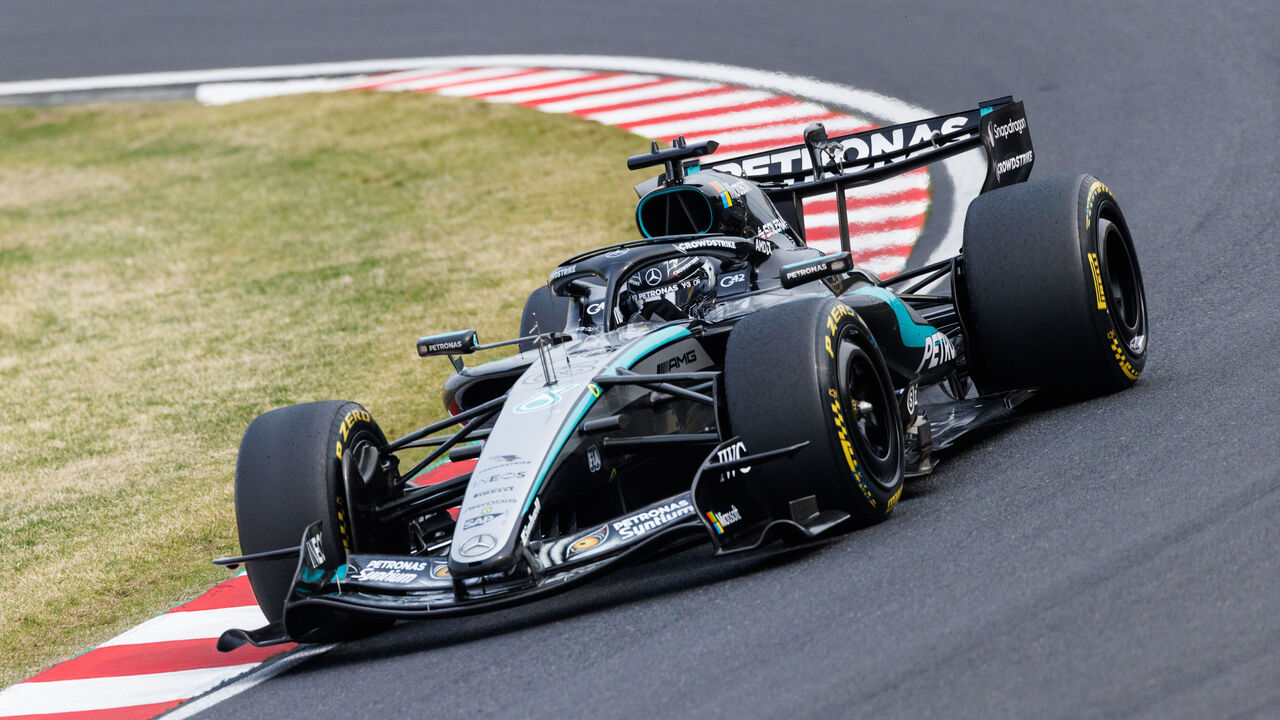
Let's be frank: One manufacturer typically gains a huge advantage anytime F1 opts for regulation changes that involve the power units, but this has nothing to do with 2026 appearing to be a two-horse race between the Mercedes pilots. Drivers have complained about feeling passive with these cars, specifically the complicated power units that now obtain 50% of their power from the electrical side.
Fernando Alonso has labeled this year the "battery world championship." There have been a lot of unusual and, truthfully, anti-driver consequences resulting from the new regulations. A small lift off throttle can lead to suboptimal deployment, causing drivers to lose significant amounts of power on the straights, which is what happened to Charles Leclerc in Japan. But my favorite moment from that weekend is George Russell accidentally hitting a button while changing gears, which induced a software glitch that caused his battery to start charging.
Try explaining that to someone who doesn't watch F1.
George Russell had a issue in Sunday's race where "a bug in the software code, triggered by a button press & a gear shift at the same time, caused the power unit to go into superclip & charge the battery."
— Daniel Valente 🏎️ (@F1GuyDan) March 30, 2026
This led him to him being overtaken. pic.twitter.com/pLQ5y49OLD
Don't get it twisted though; I'm not saying there's zero driver skill involved. Pilots still need to be quick and maximize every inch of grip available. However, it's never been more important to be as calculated as they are talented. Drivers must consider when and where to deploy energy to avoid leaving themselves vulnerable. The intuitive side is almost as crucial as their foot being on the pedal.
F1 is literally a series designed around a formula. The team that best figures out the formula and regulations typically wins the championship. Then again, the sport has been marketed as the home of the bravest and best drivers on the planet. This is supposed to be where legends are separated from mere mortals, as drivers attempt to tame some of the fastest machinery created. So far, it hasn't given off that feeling.
Verdict: Fact
The racing has become artificial
F1 operates in a unique area of the sports landscape where it not only changes the rules for technical reasons but also keeps the audience's interest top of mind (even if it doesn't always say so directly). The show is just as important as the sport itself. If the question is, do the new regulations create artificial racing? The answer is an easy "yes."
But we shouldn't pretend as if previous iterations of F1 were the purest form of racing either.
In 2011, the sport introduced the Drag Reduction System (DRS). When a trailing car is within one second of another car at the detection point, the rear wing opens and the pursuing car gets a helping hand of DRS. The car in front is powerless in its ability to counter and essentially penalized for leading. The system was introduced to promote more overtaking. Sounds pretty artificial, wouldn't you say? F1 is lucky that its boom in popularity over the last handful of years means that a significant portion of the fan base doesn't know what the sport was like before the DRS era. Had the system been introduced today, there would almost surely be cries of artificiality.
Let's not stop there. Pirelli, F1's exclusive tire supplier since 2011, was brought back in hopes that its rubber could add another element of strategy. The change was made in response to complaints that racing on the Bridgestone tires had become too dull. A 2010 Pirelli press release states that the Italian company aimed to find a compromise "between performance, durability, and spectacle." Doesn't that also sound artificial?
We could spend an eternity asking, "Well, what about this?" Regardless, the racing in 2026 can be considered artificial as well. F1 has fallen victim to the belief that more invariably means better. The more overtakes, the better the race is - except that's not always the case.
If a driver makes a pass using their battery but they're immediately overtaken because they have no energy to defend, then artificial forces are at play. The drivers are simply limited by their power units, and the final number of overtakes becomes nothing more than an inflated figure on a graphic. There's no single recipe for a great race; some may feature one suspenseful overtake, while others might be filled with passes, but the one necessary factor is that it has to be organic.
Not every bit of action has been the equivalent of drivers throwing Koopa shells at opponents or using mushrooms for a burst of speed. So far, the best moment to come from these regulations has been Leclerc and Lewis Hamilton battling through corners in China. Nothing about it was inauthentic, as it felt like the outcome was in the drivers' hands. The worst moments happened in Australia and Japan, where many of the overtakes seemed to be a result of the battery rather than the driver.
Verdict: It's complicated
There's nothing F1 can do to improve the cars

There's no denying that all isn't well in the sport. Many drivers have been outspoken about the new rules, and criticism from beyond the paddock only appears to be growing. F1 is in a jam right now. Seemingly obvious solutions, such as adjusting the 50/50 split between the internal combustion engine and electrical power in favor of the former, cannot happen in the short term. Teams simply don't have enough time or money under the cost cap to redesign an engine or increase the size of their fuel tanks, which would then complicate their chassis design and once again make the cars heavier.
However, that doesn't mean potential tweaks can't be considered for next year.
Plus, F1 can still make a few temporary fixes this season. Reintroducing flat-out qualifying laps is at the top of the agenda, and it may be possible, depending on alterations made to deployment and battery-charging allowances. What exactly that would look like has yet to be determined, but the FIA is scheduled to meet later in April to discuss potential revisions, which reportedly could include reducing the amount of energy that can be recharged and decreasing the maximum deployment limit, among other ideas.
While I've been outspoken about the impact of the new regulations, it's important to recognize that it's only Year 1. F1 and the FIA were very ambitious in their efforts, and they didn't get everything right, but that doesn't mean the flaws are baked in permanently. And you can bet your last dollar that the two governing bodies wouldn't hesitate to make drastic changes if the new rules start to affect the commercial success of their product.
Verdict: Fiction
The ground-effect era was better

Despite the ongoing hiccups, we can't let revisionist history alter the truth about the last generation of cars.
The ground-effect era began on an unthinkable high in 2022. Cars were able to follow closely, and Ferrari and Red Bull were locked into battle. By the end of 2025, though, the cars couldn't follow well at all, and most races became a push to reach Turn 1 first. The majority of the drivers and fans grew tired of the overweight, stiff, and rigid cars that dominated the period.
The new generation of cars is definitely more aesthetically pleasing than its predecessor. They're also lighter and nimbler. Essentially, they're polar opposites of the ground-effect cars given that one particular setup - running the car as low to the ground as possible - proved to be most effective during the previous era. While there's no sugarcoating the fact that the power units inside the 2026 cars need modifications, the ceiling for this era is much higher than the last one. It'll just require some patience.
Verdict: Fiction
Daniel Valente is theScore's lead Formula 1 writer. Daniel has covered the sport for multiple years, conducting analysis and interviewing key figures inside the paddock. His expertise is breaking down data and discovering unique stats. Follow Daniel on X at @F1GuyDan.