
The Leo Carlsson offer sheet saga came to a close Thursday with the Anaheim Ducks matching the Philadelphia Flyers' massive five-year, $90-million contract to retain the young center after nearly a week of speculation. There are plenty of ramifications for both teams and the remainder of the league after the seismic transaction. Let's unpack it all.
Ducks HAD to match
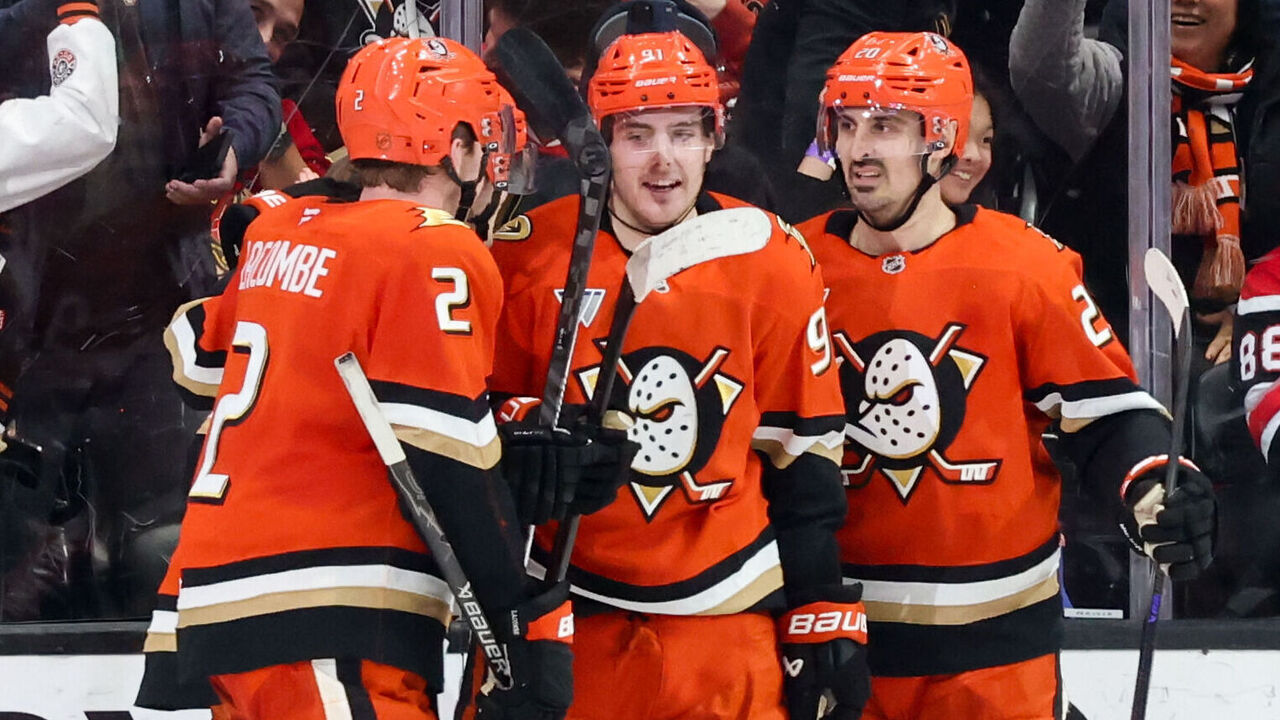
It's odd Anaheim took six days to match Philadelphia's offer, but in retrospect, there was really never another option for the Ducks. Some fans and pundits were enticed by the allure of four first-round picks and the flexibility that would come with them, but what are the odds the Ducks could have found someone better than Carlsson in the draft or via trade?
The available center market in the NHL is barren right now. Dylan Larkin will reportedly only accept a trade to four teams that are championship ready, and most other veteran options have already been traded this summer. Letting Carlsson walk would've positioned Anaheim to start the 2026-27 campaign with Mikael Granlund as its top pivot, which does not align with the Ducks' plans to be relevant in the Western Conference after ending a seven-year playoff drought this past spring and winning a round.
Carlsson's new cap hit is undeniably jarring, but it's important to remember he's 21, effective at both ends of the ice, and has plenty of room to grow into a bigger star. The only under-24 centers who outproduced Carlsson's 67 points last season were Macklin Celebrini, Wyatt Johnston, and Connor Bedard. Carlsson also missed 12 games, so it's not unfathomable to think he can make a jump into the next echelon sooner rather than later.
Letting Carlsson walk would have done irreparable damage to the Ducks' contention window, and it's worth noting that the four first-round picks Philadelphia would have surrendered would be in consecutive years. Letting a 21-year-old star leave for a first-round prospect in 2030? No thanks. - O'Leary
Verbeek should be on hot seat
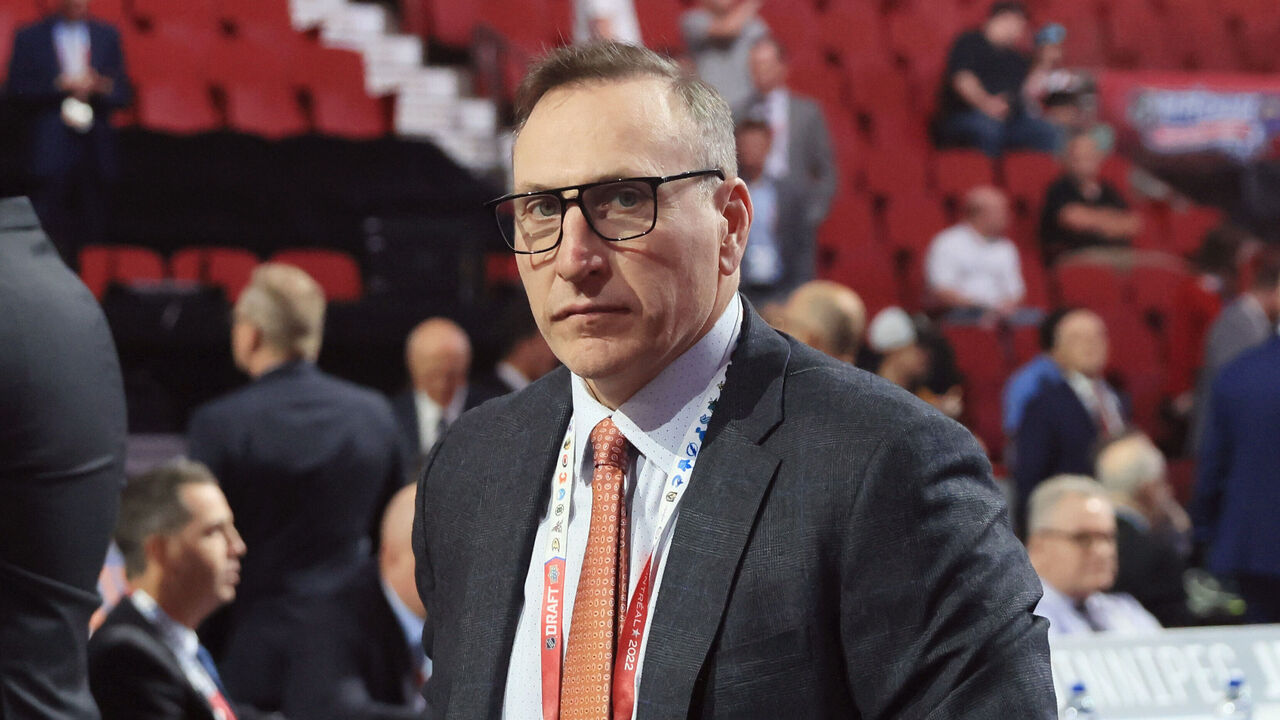
While it's true the Ducks had to match, it's also true that it never should've gotten to this point, and that falls squarely on Pat Verbeek.
Anaheim's general manager is known as one of the league's toughest negotiators, but he clearly got too greedy this time around. He had a full calendar year to negotiate with Carlsson, who was eligible to sign an extension since July 1, 2025. If the Ducks had gotten Carlsson signed before the 2025-26 season, the AAV almost certainly comes in under $10 million. Earlier this offseason, Carlsson was reportedly willing to accept a deal with an AAV around $15 million, but the Ducks said no.
Anaheim is now left with just $9 million in cap space, and it still has to sign fellow RFA Cutter Gauthier. He doesn't have the same leverage as Carlsson because he's not eligible for an offer sheet, but coming off a season in which he led the Ducks in goals (41) and points (69), Gauthier's asking price has almost certainly gone up after seeing Carlsson's deal.
Any type of cap structure Verbeek was trying to create in Anaheim is now gone. Calder Trophy finalist Beckett Sennecke will demand a hefty payday when he's eligible in a couple years. At least Verbeek got star defenseman Jackson LaCombe locked up.
But even if Verbeek is able to get Gauthier signed, there are more fish to fry. The blue line is in shambles following the departures of John Carlson, Jacob Trouba, and Radko Gudas on the right side.
I think we can all agree this is pretty easily the worst defense in the league pic.twitter.com/xR66lAMtLw
— Top Tier Hockey (@TopTierPucks) July 9, 2026
The four-year, $17-million contract Verbeek gave to career fourth-liner A.J. Greer is even more perplexing now with so many holes elsewhere on the roster. Verbeek is almost certainly going to have to try and move a high-priced veteran forward in Chris Kreider, Alex Killorn, or Frank Vatrano, but it won't be easy.
The Ducks took a major step forward last season, but now they're on the verge of taking two steps back, and it might eventually cost Verbeek his job. - Wegman
Can Carlsson be an $18M player?

Is Carlsson worthy of being the NHL's highest-paid player next season? Of course not. But in a few years, his $18-million AAV might not seem too crazy.
This is a player who's just scratching the surface of his potential. He made a huge leap from 45 points in 2024-25 to a career-high 67 last season. All the tools are there for him to continue developing. Carlsson's a 6-foot-3, 209-pound center with a rare combination of skill and skating ability. It shouldn't shock anyone if he reaches 80 points next season and flirts with 100 in a couple years.
An $18-million AAV also isn't what it used to be. By the time the 2028-29 season rolls around - halfway through Carlsson's new contract - the cap ceiling is projected to be $123 million. At that point in time, Carlsson's AAV will be the equivalent of a player making roughly $12 million per season when the cap ceiling was $81.5 million for three seasons from 2019-22.
While it'll never be a true team-friendly deal, Carlsson absolutely has the potential to be worthy of his contract. And with the slew of stars up for new deals over the next year or so, Carlsson likely won't be the league's highest-paid player for long. - Wegman
NHL's salary landscape forever changed
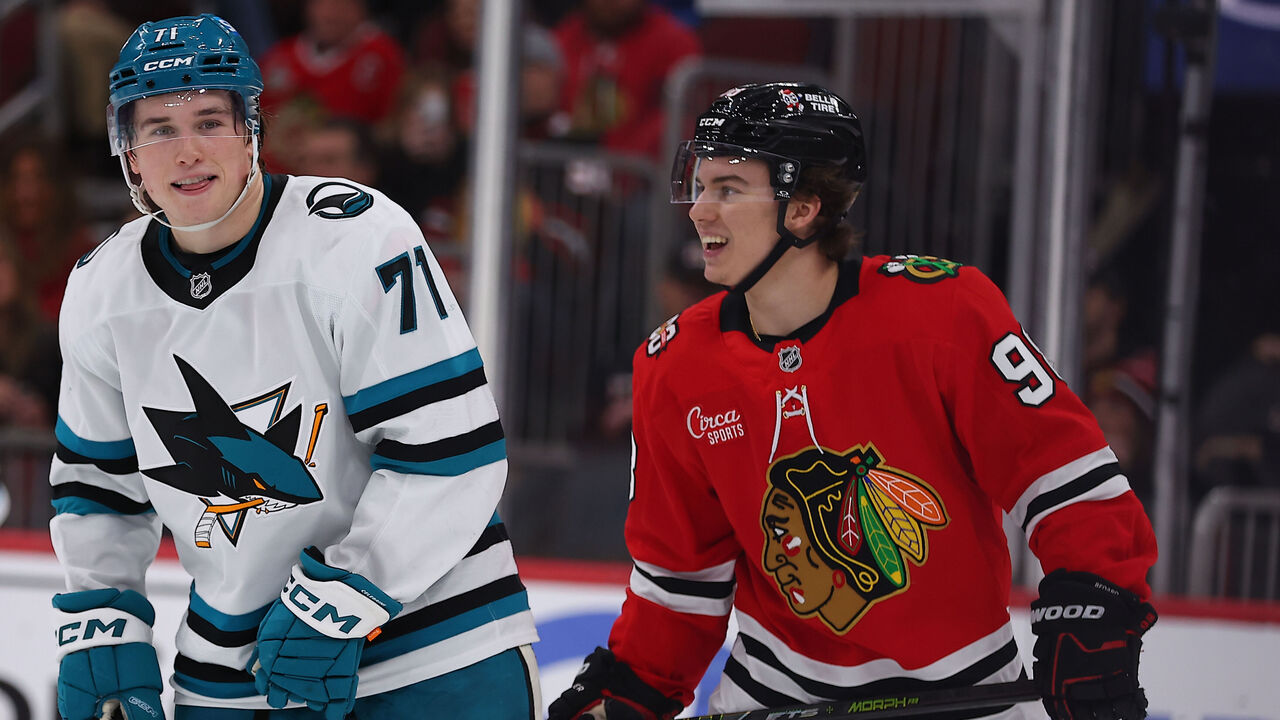
Carlsson being the highest-paid player in the league was not on our 2026-27 offseason bingo card, but his peers and their agents must be salivating at the new standard this offer sheet just set.
If Carlsson is an $18-million player, how much can Bedard ask for this summer? What about Celebrini? The 2028 RFA was a Ted Lindsay Award finalist at 19 after a 115-point campaign, and he was arguably Canada's best player at the Olympics. The NHL's rising salary cap was bound to benefit players eventually, but an $18-million baseline arrived sooner than expected.
It remains to be seen if established UFAs will push to match or usurp Carlsson's new record cap hit, but there's no shortage of candidates to potentially overtake the Swede in short order. Nikita Kucherov, Cale Makar, and Quinn Hughes are all extension-eligible this summer, and the 2028 free-agent class includes Connor McDavid, Zach Werenski, Brady Tkachuk, and Auston Matthews.
The NHL has long lagged behind the other big North American leagues in terms of player compensation, but suddenly it feels like it won't be long before hockey boasts a $20-million player. - O'Leary
Where do Flyers go from here?
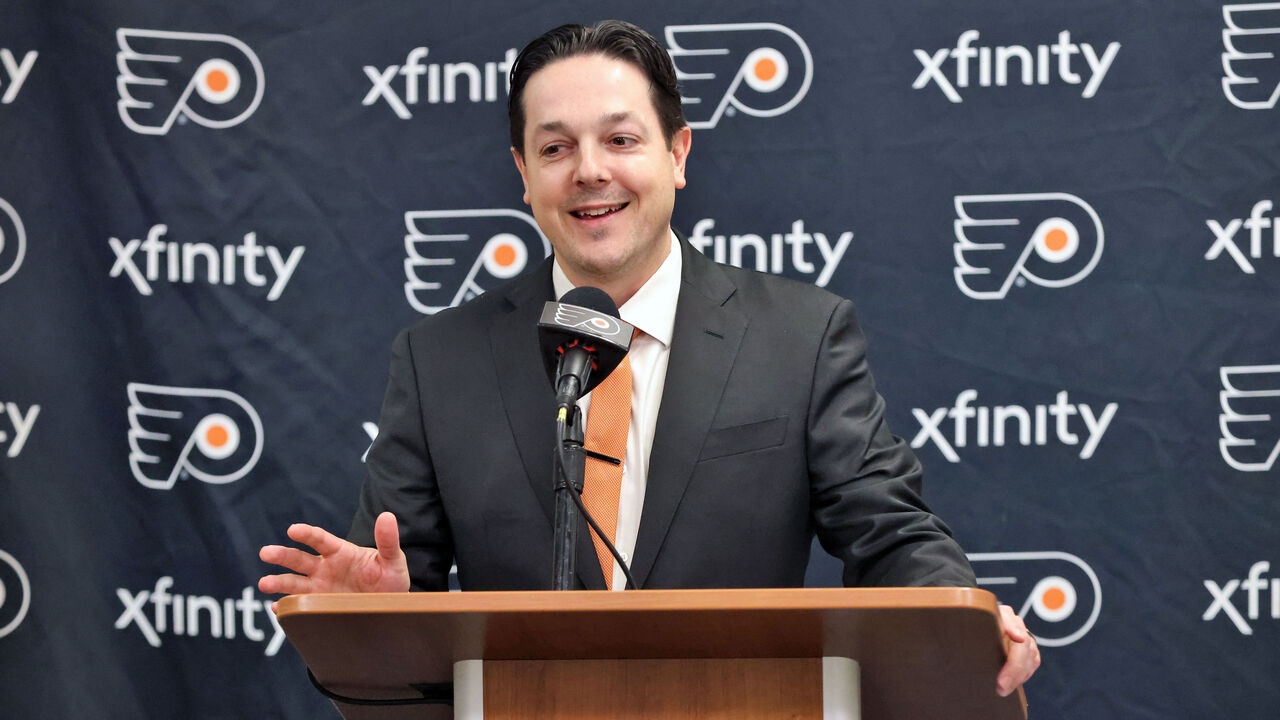
Flyers GM Danny Briere may have made an enemy in Verbeek, but also likely made 15 other allies. Every other Western Conference GM is likely pleased that the Ducks - a team on the rise - just had their cap structure destroyed.
Philadelphia, meanwhile, remains a team stuck in standings purgatory: not good enough to be a legitimate Cup contender, but too competitive to bottom out and draft high enough to get a player of Carlsson's ilk.
Maybe the Flyers consider another offer sheet. Of the remaining eligible RFAs, Bedard and Adam Fantilli would best fit Philadelphia's needs of a potential No. 1 center. The Blackhawks would almost certainly match any offer sheet for Bedard. Columbus has the cap space to match for Fantilli, but it's possible the bonus-heavy, front-loaded structure the Flyers used on the Carlsson offer sheet could present a problem for a Blue Jackers ownership group that typically hasn't structured contracts in such a way.
After all of this, the one thing that feels certain for the Flyers is they'll be sure to sign Matvei Michkov before he becomes an RFA next offseason. If not, there's obvious risk of a revenge offer sheet. - Wegman