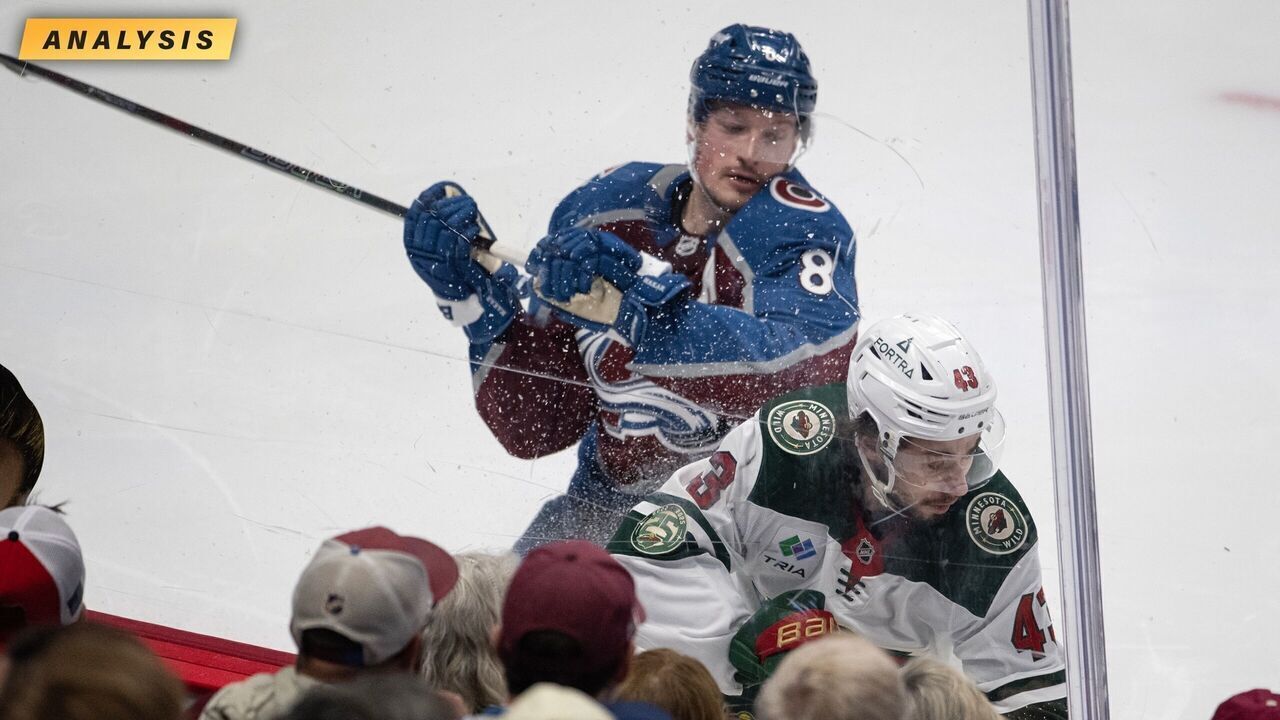
Whoever signs an extension first between Cale Makar and Quinn Hughes is a safe bet to garner the highest average annual value in NHL history. The honor would likely be short-lived, though, as whichever player signs second could easily one-up the other star defenseman.
That's what makes the situation with the NHL's consensus top two blue-liners, who are both on expiring contracts while squarely in their primes, so compelling. But who will blink first?
Will it be Hughes and the Minnesota Wild? The team may feel pressure to get a deal done given the haul it took to acquire him from the Vancouver Canucks last season.
Rumors of Hughes forcing his way to the New Jersey Devils to play with his brothers, Jack and Luke, will linger until pen is put to paper with Minnesota. The Wild are reportedly confident that they'll sign him before the season begins, and they would surely love to squash all speculation before training camp opens. But the longer Hughes goes without a deal, the louder the noise will grow.
The potential of a Hughes brothers reunion is also partly why a three-year extension makes a lot of sense for Quinn if he decides to re-up with the Wild. That would make him an unrestricted free agent the same year as Jack while still giving him a window to try and win a Cup with Minnesota, a team that's arguably a Dylan Larkin-type player away.
Even on a three-year deal, Hughes could be in a position to demand an AAV north of Macklin Celebrini's record $18.8 million. While Celebrini signed for five years in July, Hughes being a year away from unrestricted free agency gives him more leverage than Celebrini, who was scheduled to enter restricted free agency next summer.

An AAV of $20 million might sound absurd, but it's only a matter of time given the NHL's rapidly rising salary cap. The floodgates opened this summer when the Philadelphia Flyers signed Leo Carlsson to a five-year offer sheet with an $18-million AAV, which the Anaheim Ducks matched. Carlsson's deal undoubtedly influenced Celebrini's, and it will continue to have a ripple effect on eventual contracts for Hughes, Makar, Nikita Kucherov (another 2027 UFA), and other superstar players as they become extension-eligible.
Whether Hughes actually fights for every dollar remains to be seen. He could leave some money on the table despite there being no precedent for doing so in Minnesota, which inked Kirill Kaprizov to an eight-year extension with a $17-million AAV last September. But if Hughes aims for the max cap hit (20% of the upper limit), it wouldn't be completely shocking to see Bill Guerin cave. Landing Hughes took a lot of guts, and the Wild's president of hockey operations isn't about to let him go without exhausting every option.
There is, however, a precedent for players taking less money with the Colorado Avalanche, making Makar's extension a bit more unpredictable. Nathan MacKinnon famously took only $100,000 more than the league's highest AAV when he signed his eight-year extension in 2022, even though he easily could've soared past it like Kaprizov did.
The length of Makar's extension will also be interesting, considering a long-term deal seems more likely than it does for Hughes. Makar, whom the Avalanche drafted in 2017, has roots in Colorado. He won a Cup with the Avs, and they appeared destined to do so again last season before getting swept by the Vegas Golden Knights in the Western Conference Final. The idea of Makar leaving to play elsewhere feels highly unlikely. Avalanche president of hockey operations Joe Sakic said Sunday that "dialogue's been great" with Makar's camp. He also proclaimed in June, "Cale's going to finish his career here."
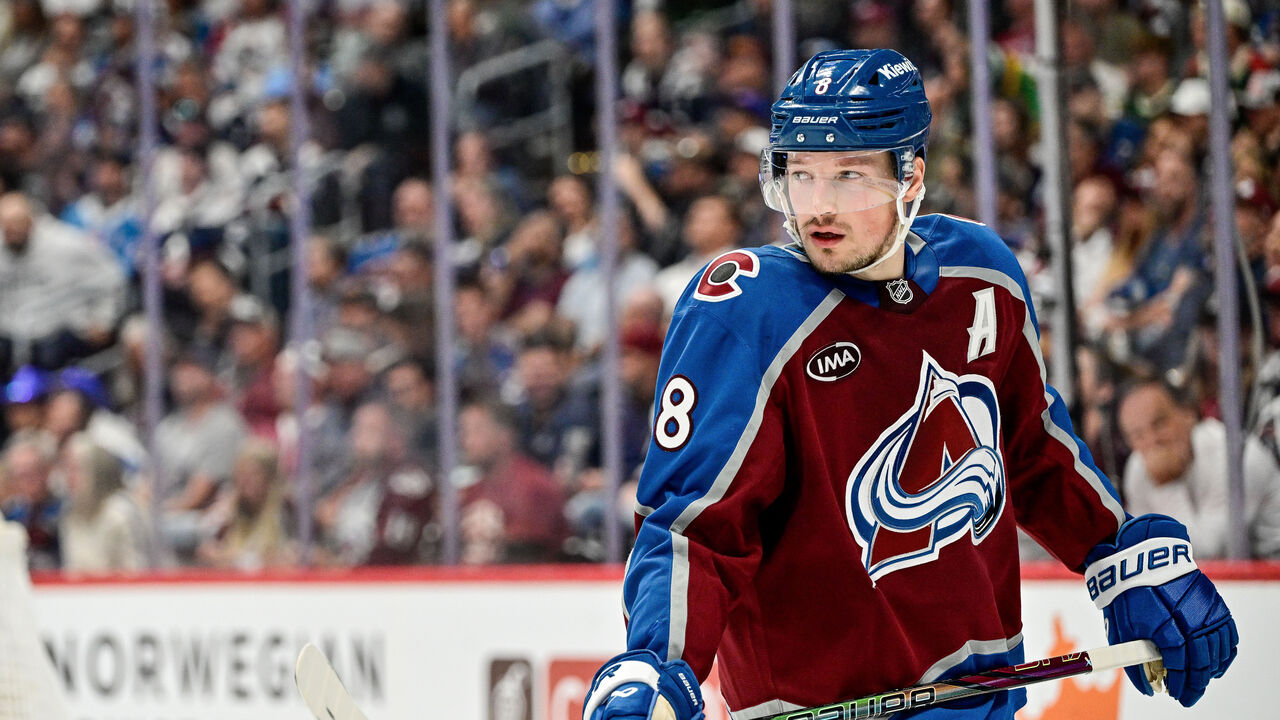
If Makar wants an eight-year deal, he has until Sept. 15, when the limit is reduced to seven years as part of the new collective bargaining agreement. But does he want to commit for that long? A five-year extension, just as Celebrini opted for, may be the sweet spot. Makar could see things through with the Avalanche for the remainder of MacKinnon's prime while lining himself up for another massive payday when he's 33 and theoretically at the tail end of his own peak. He also notably sought a shorter term on his current deal, signing for six years when Colorado surely would've preferred eight.
If Makar intends to sign for five years, a fair AAV would start at $19 million. Anything less would be a hometown discount, which can't be ruled out. After all, this seems entirely up to Makar. The Avs have probably given him a blank check.
My best guess: Hughes signs first for three years with a $19-million AAV, then Makar follows up with a five-year extension with a $19.5-million AAV.