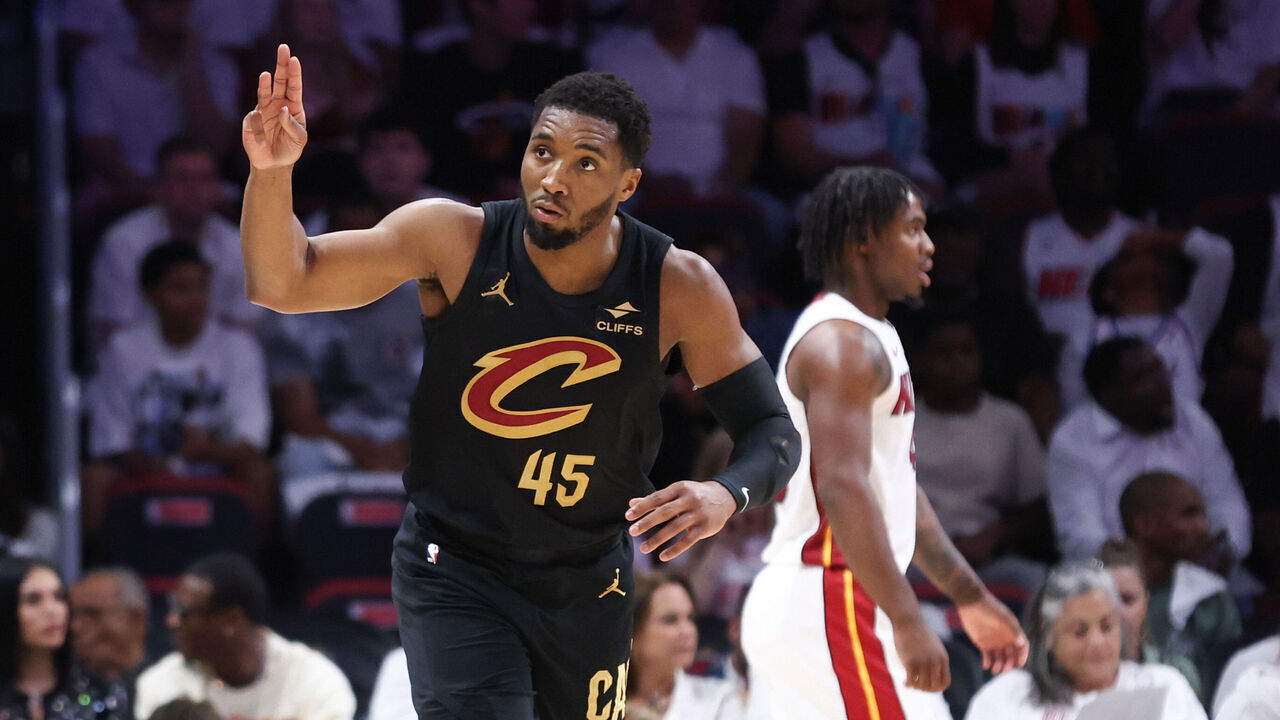
The Cleveland Cavaliers were determined to punch their ticket to the second round as soon as possible.
However, they probably expected a little more resistance.
The Cavs' 138-83 rout of the Miami Heat in Monday's Game 4 capped one of the most lopsided series wins in NBA playoff history, with plenty of statistical context to illustrate their four-game dominance over the Heat.
1st - Cleveland's 55-point win is the largest margin of victory in any postseason series-clinching game in league history.
4th - The result is also the fourth-biggest victory ever registered in a playoff contest, according to the Miami Herald's Anthony Chiang. The Minneapolis Lakers (1956) and Denver Nuggets (2009) share the record with 58-point wins.
11 - The Cavaliers pulled off their 11th sweep in franchise history, but the first without LeBron James on the roster.
30 - This year's Heat are the first NBA team to lose back-to-back playoff games by at least 30 points in the same season, per stats specialist Keerthika Uthayakumar. Both big losses came in front of their fans in South Beach.
39 - Cleveland's 39-point halftime lead (72-33) is the third-largest in postseason history. The record still belongs to the Cavaliers, who led the Boston Celtics by 41 at the break in Game 2 of the 2017 East finals before cruising to a 130-86 win.
77 - No other team has ever hit more threes in a four-game playoff series than this year's Cavaliers. The only club to match that number across four contests was the 2016 Cavs - the same squad that went on to win the franchise's only championship.
122 - Cleveland's point differential over the four-game series is the largest in playoff history, according to The Associated Press' Tim Reynolds.