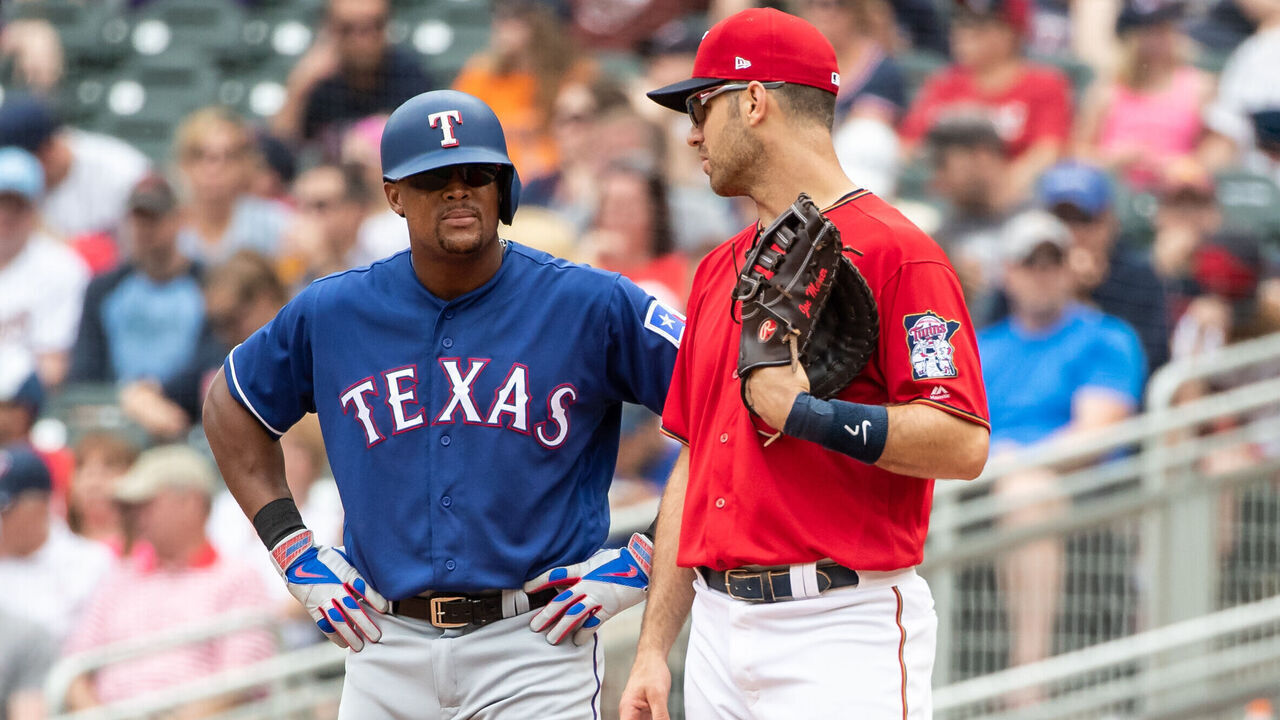
With the Baseball Hall of Fame's class of 2024 announcement approaching, it's time to review this year's ballot. Our final installment looks at the two star newcomers on this year's ballot. One of their phones will be ringing Tuesday - but will he share the stage in July?
- Helton headlines returnees on verge of election
- Utley, Wright present intriguing cases
- Will controversial candidates ever find momentum?
- Abreu aims to rise, others keep holding on
- Best of 'one-and-dones'
Adrián Beltré
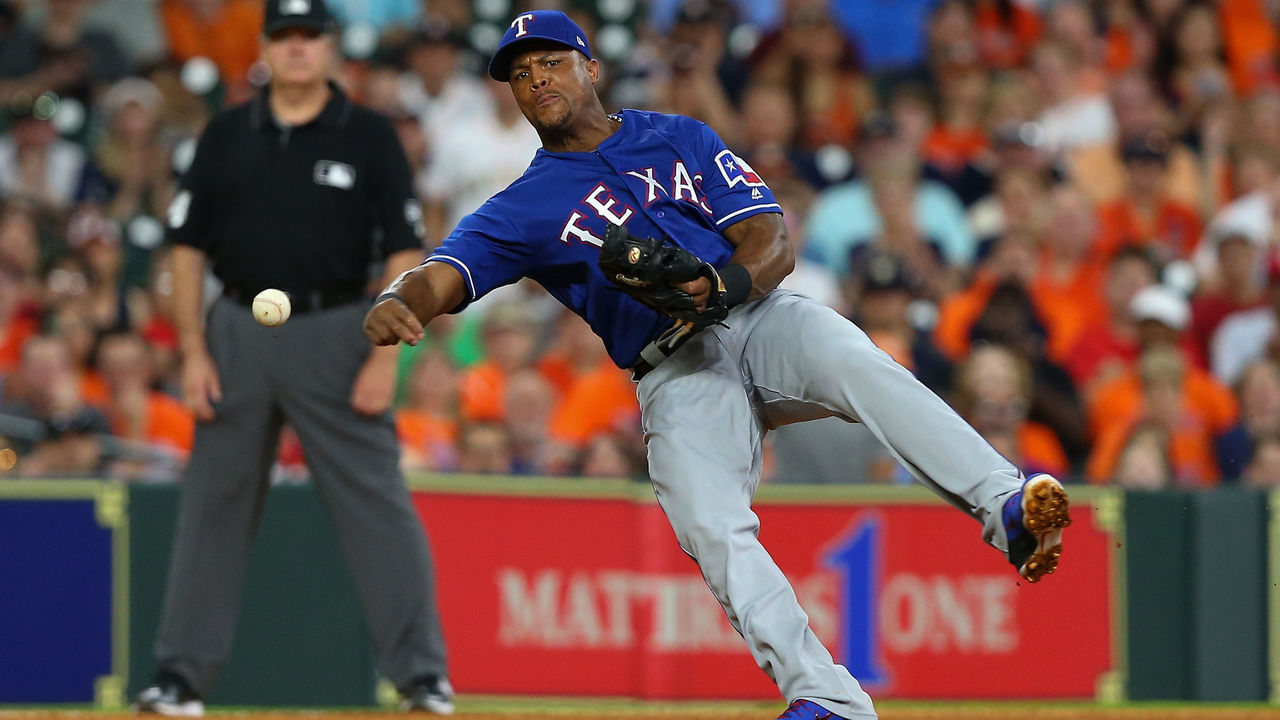
Position: 3B
Years: 1998-2018
Teams: Dodgers, Mariners, Red Sox, Rangers
JAWS: 71.1 (4th at 3B)
WAR: 93.5 (3rd)
Year on ballot: 1st
| GP | BA | OPS | H | HR | RBI | SB |
|---|---|---|---|---|---|---|
| 2933 | .286 | .819 | 3166 | 477 | 1707 | 121 |
Third base is the most underrepresented position in the Hall of Fame. It's hard to say exactly why, but none of that matters in Adrián Beltré's case. He cleared all the bars with ease during his incredible 21-year career.
Beltré signed with the Dodgers for $23,000 in 1994. After his second big-league season, the Dodgers admitted to falsifying documents to show his birth year as 1978, meaning the club illegally signed him as a 15-year-old. MLB fined the Dodgers for the transgression but denied agent Scott Boras' request to make Beltré a free agent. Nonetheless, he reached the majors at 19 years and 78 days old, making him the second-youngest player to debut in the wild-card era.
He played great defense immediately but was inconsistent at the plate over his first six seasons. That all changed in 2004 when Beltré broke out with his best offensive campaign: a .334/.388/.629 slash line with 200 hits, 104 runs, 9.6 WAR, and an MLB-high 48 homers, plus 22 defensive runs saved at third base. Beltré led the Dodgers to their first playoff berth since 1995 and was the runner-up to Barry Bonds for NL MVP.
He cashed in that winter, signing a five-year, $64-million contract with the Mariners. Outside of winning his first two Gold Gloves, his tenure in Seattle represented the low point of his career. Beltré's offensive numbers plummeted at Safeco Field; he put up an OPS above .800 just once as a Mariner. Shoulder and thumb injuries, along with a ruptured testicle from a bad-hop ground ball (Beltré famously refused to wear a cup), marred his final two seasons with the Mariners.
Beltré left Seattle as a 30-year-old third baseman with a 105 OPS+. Instead of signing another multi-year deal, he took Boras' advice and signed a one-year, $10-million contract with the Red Sox to rebuild his value.
At the time, few players had taken that kind of free-agency risk. But it paid off handsomely for Beltré. In his lone season in Boston, he won his first Silver Slugger, led the majors in doubles (49), and finally earned an All-Star berth. Beltré immediately returned to free agency and signed a five-year, $80-million deal with the defending AL champion Rangers.
Beltré kept raking in Texas, winning another Silver Slugger while helping the Rangers win a second straight pennant. He also crushed three homers during the Rangers' ALDS-clinching victory and then hit .300 with two homers in the World Series. Beltré's homer in the seventh inning of the classic Game 6 against the Cardinals appeared to be the series-clinching run, but St. Louis stormed back to take the game and series.
Amid his growth as a hitter in Boston and Texas, it suddenly became clear that Beltré was marching toward Cooperstown. Before many even realized, he crossed the 2,500-hit threshold in 2014 and reached 400 homers the next year. On July 30, 2017, he became the first Dominican-born member of the 3,000-hit club. He retired in 2018 as the all-time hits leader among players born outside the United States.
It may have taken an incredible second-half surge, but Beltré ultimately left no doubt about whether he belongs. From an advanced standpoint among third basemen, he sits third in WAR, fourth in JAWS, and sixth in seven-year peak WAR. Only Beltré, Wade Boggs, Eddie Mathews, and Mike Schmidt collected at least 90 career WAR as primary third basemen.
He's also got the traditional crowd covered. Beltré is one of 12 players - and the only third baseman - with 3,000 hits and 400 home runs. He's one of five third basemen with 400 homers, one of four with 3,000 hits, and is the position's leader in RBIs, total bases, plate appearances, and games played. Beltré places 18th all-time in hits, 15th in total bases (5,309) and extra-base hits (1,151), and 11th in doubles (636). His trophy case includes five Gold Gloves, two Platinum Gloves, and four Silver Sluggers.
Beltré's 200 defensive runs saved (tracked since 2003) rank second across all positions, and he's still 44 ahead of active DRS leader Nolan Arenado. Beltré trails only the great Brooks Robinson in fielding runs (216) and defensive WAR (27.0) at third base. In short, he's about the closest anyone's ever come to matching Robinson's defensive standard at the hot corner.
Add in his status as one of the most beloved modern players thanks to his fun-loving persona, and you get an easy Hall of Famer. Beltré won't be unanimous as he's been left off two of the 145 known ballots, so the only suspense is how high his final total will be. Beltré's induction day promises to be a memorable, fun-filled celebration of an all-time great - just as long as nobody touches his head.
Joe Mauer

Position: C/1B
Years: 2004-2018
Teams: Twins
JAWS: 47.1 (7th at C)
WAR: 55.2 (9th)
Year on ballot: 1st
| GP | BA | OPS | H | HR | RBI |
|---|---|---|---|---|---|
| 1858 | .306 | .827 | 2123 | 143 | 923 |
Injuries cut Joe Mauer's peak short, forcing him to play out the string as an average first baseman. For many, that left him with too brief of a career, even by catching standards. Still, he's among the greatest at his position and is this year's one other potential first-ballot inductee. Can he beat the odds?
Mauer grew up in the Twin Cities and was a naturally gifted athlete. At St. Paul's Cretin-Derham Hall High School, he excelled at three sports and committed to Florida State as a quarterback. But those plans changed when his hometown Twins chose him first overall in the 2001 draft, ahead of USC pitcher Mark Prior.
Mauer quickly rose through the minors and made the Twins' Opening Day roster in 2004. However, the injuries began just as fast. The day after his two-hit debut, Mauer tore his meniscus, a development limiting him to 35 games as a rookie. He wouldn't truly break out until 2006, when he became just the third catcher and the first in the American League ever to win a batting title.
That campaign started a dominant eight-year run that included three Gold Gloves, five Silver Sluggers, and three batting titles in four seasons. Mauer ran away with the 2009 AL MVP by winning the "slash-stat Triple Crown" - he's the only catcher to do that - and posting the second-highest average (.365) and fourth-highest WAR (7.8) for a backstop, along with a career-best 28 homers and Gold Glove-winning defense.
The Twins signed him to an eight-year, $184-million extension after the MVP win. While some criticized Mauer for his continued injury troubles after signing the deal, he remained quietly excellent when healthy (17.3 WAR from 2010-13).
On Aug. 19, 2013, amid what was his last great year, Mauer suffered a career-altering concussion from a foul ball off his mask. The injury ended his season and forced him to move to first base permanently.
Mauer's bat wasn't the best fit at first base, and he was a shell of himself at the plate for most of his final five seasons. Still, he was a solid defender and posted an AL-leading 13 defensive runs saved at first in 2017. He had one last "Mauer-esque" campaign that year (.305/.384/.417, 115 OPS+), helping the Twins reach the playoffs.
Early in 2018, he recorded his 2,000th career hit - an impressive feat for any catcher but especially remarkable given Mauer's history. Injuries again interrupted his season after that and led to questions about his future, although Mauer kept quiet all summer. In the Twins' season finale at Target Field, he went behind the plate for one last pitch in what became an emotional sendoff for a hometown hero. He officially retired that November.
Catchers can only be properly evaluated against their fellow backstops due to the job's unique nature. Although he caught only 921 games and his career was short even by catcher standards, Mauer's resume not only matches up to the greatest backstops but exceeds some of them. He's the only catcher outside Cooperstown who's above the average Hall of Famer in both JAWS and WAR.
Mauer's also one of 12 primary catchers (minimum 50% of games at the position) with 2,000 career hits, one of two to win multiple batting titles, and the only one with three. Uniquely gifted at reaching base, Mauer's the lone catcher to lead his league in OBP twice - there are only two other catchers since 1876 who've even done that once - and his six .400-plus OBP seasons as a catcher are second to Mickey Cochrane. Among the 20 catchers with at least 7,000 career plate appearances - 10 of whom are in Cooperstown - Mauer owns the highest OBP (.388), the third-highest average (.306), and places sixth in OPS (.817) and OPS+ (124).
Defensively, he was quietly sound. An excellent pitch-framer, Mauer tallied 27.6 framing runs over his final six catching seasons (PITCHf/x debuted in 2008). From 2004-07, Baseball Prospectus' retroframing pegged him at over 38 runs above average, putting him in elite company, as FanGraphs' Jay Jaffe noted. Mauer also capably controlled the running game, leading his league in caught-stealing percentage twice.
Writers didn't hold Johnny Bench's final years as a below-average third baseman against him in 1989, nor did they keep Ernie Banks waiting because his knees turned him into a rapidly declining first baseman for a decade. Ideally, the voting bloc will apply this standard to Mauer now and forget about his final few years, but history shows he shouldn't get his hopes up. The BBWAA has a history of snubbing catchers, only electing two - Bench and Ivan Rodriguez - on the first ballot.
The good news is that Mauer's polling well in the tracker, sitting at 83.9% on public ballots. While that number will likely drop a bit when private votes are added, it's a surprisingly good start for a player whose case was never going to convince everyone right away.
Mauer's chances of getting a phone call Tuesday feel 50-50 at this point, and we certainly hope that happens. If it's not this year, he'll be right on the doorstep to make it in 2025. One way or another, his day is coming soon.