About one-third of the NFL decided to shake things up in the offseason by bringing in a new offensive coordinator. Plenty teams had different reasons to do so: whether it was a pure overhaul in the coaching staff, trying to rejuvenate a struggling quarterback or even just a change of philosophy.
It's still very early to be judging offenses as they get acclimated to new schemes, but there's been a couple of changes that have worked out marvelously thus far, as well as a couple that have left you scratching your head.
Here's a list of two offenses that have made a smooth transition to a new scheme and two that you should be worried about when choosing your DFS football roster moving forward.
Smooth Transitions
New York Jets OC Chan Gailey
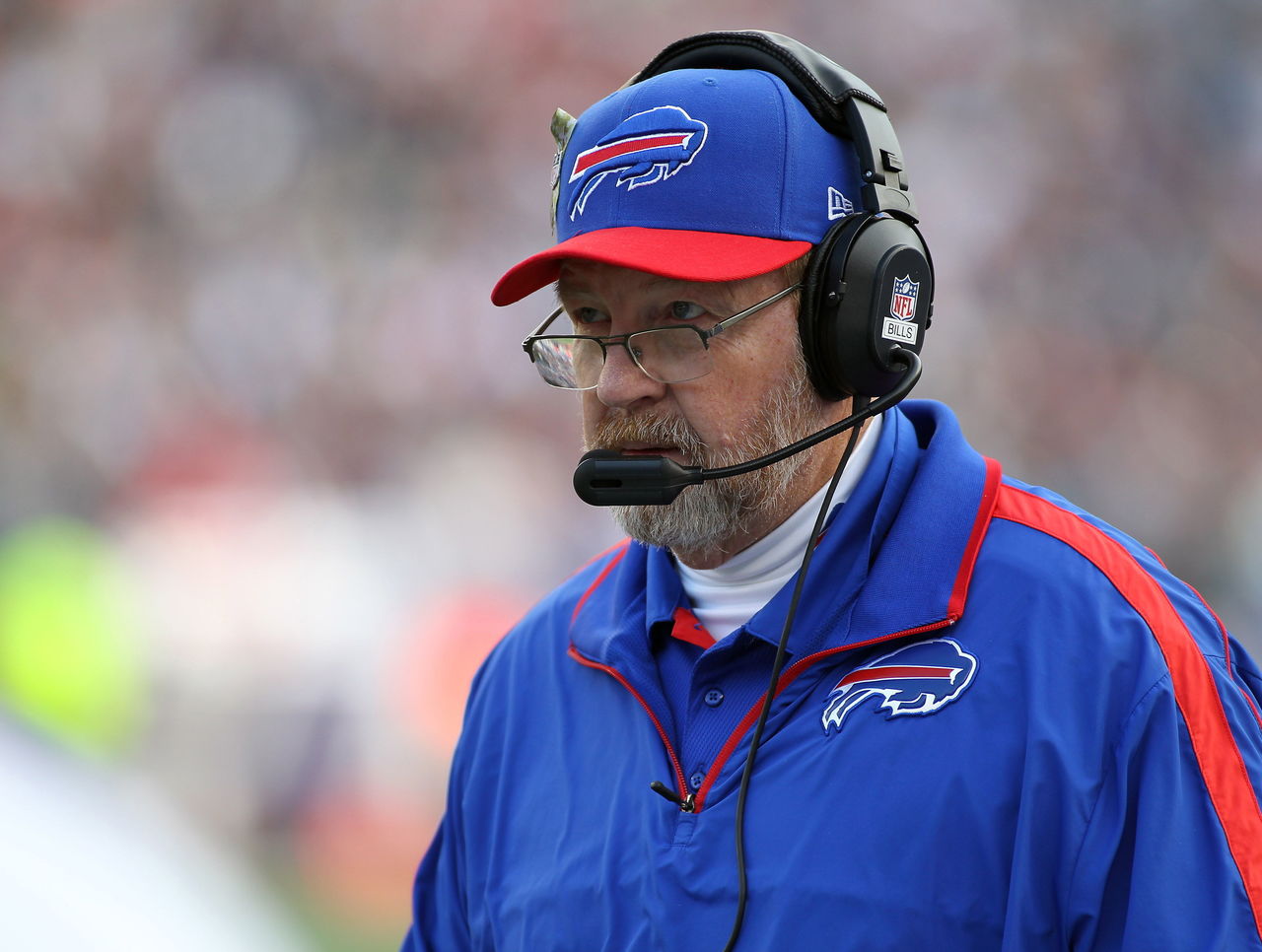
Gailey has coached a lot of football in his day. He began coaching in the NFL as a TE/ST coach with the Denver Broncos in 1985 - before many of today's players were even born. His most recent stop before joining the Jets was as the head coach of the Buffalo Bills.
Gailey took over a depleted roster on both sides of the ball. However, he was able to put together a half decent offense with an awful offensive line, Fred Jackson at RB, Stevie Johnson as far and away the number one receiving threat and journeyman Ryan Fitzpatrick at QB.
Reunited with Fitzpatrick in New York, Gailey has much more to work with: D'Brickashaw Ferguson anchors an above average offensive line, a vastly underrated bruising tailback in Chris Ivory and two power forwards at WR with Brandon Marshall and Eric Decker. For the first time together, Gailey and the Amish Rifle have some weapons to play with.
Gailey is a flexible coordinator, but has had most of his success running a quick-hitting, run-heavy, spread offense. So far it has been extremely beneficial for Marshall and Decker who have combined for 297 of Fitzpatrick's 423 yards through the air, making them both DFS relevant in all formats.
Ivory has also benefited nicely with 148 rushing yards and two touchdowns through two weeks. He's also a fairly inexpensive play and will continue to provide great value as long as Todd Bowles' defense is able to hold teams in check - thereby allowing New York to control the ball late with Ivory.
As for Fitzpatrick, he's still risky to use in cash games, but offers a nice contrarian play in GPP if the right matchup is there.
Atlanta Falcons OC Kyle Shanahan
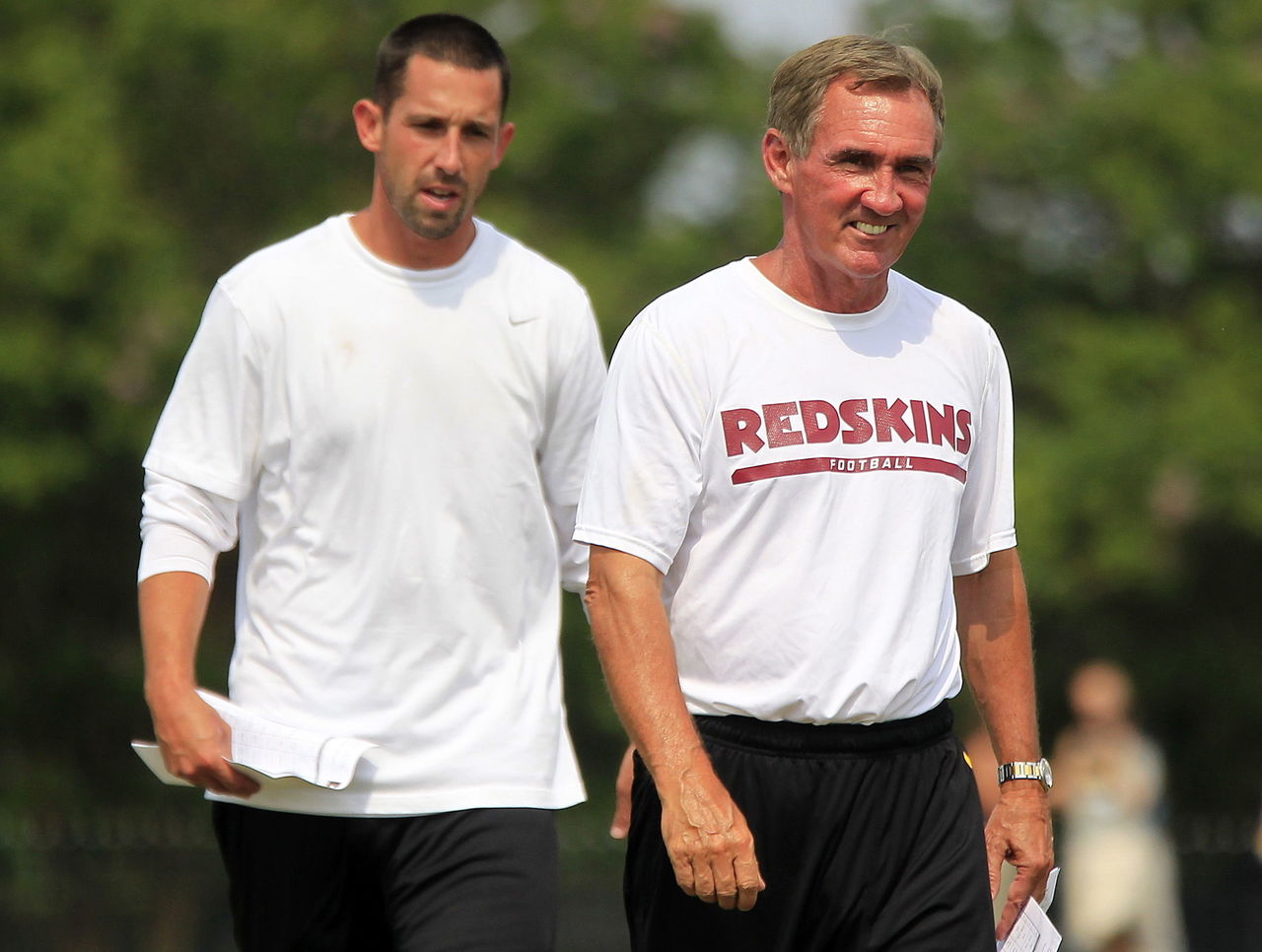
The son of Super Bowl winning coach Mike Shanahan, Kyle uses the same zone-running, play-action, bootleg scheme that Mike used to propel the Broncos to back-to-back Super Bowl victories in 1998 and 1999 with an aging John Elway under center.
Shanahan has had previous success as the OC of the Houston Texans, Washington Redskins and Cleveland Browns. With Houston, he made a 1,200 yard rusher out of Steve Slaton, turned the Redskins into a surprise playoff team with Alfred Morris' 1,600 yards leading the way and formed a solid rushing attack last season in Cleveland with Isiah Crowell, Terrance West and Ben Tate. See the trend here?
Now in Atlanta, with the best QB he's ever worked with in Matt Ryan, the Falcons are off to a 2-0 start after defeating the Eagles and the Giants. Ryan and the Falcons had their most successful seasons when RB Michael Turner was toting the ball 300+ times a year.
With the injury to rookie RB Tevin Coleman, Devonta Freeman suddenly becomes a great bargain play, but expect Coleman to have some big weeks once he returns. The heavy dose of play-action passes has worked nicely for Ryan and Julio Jones, who provide a great combo-play in all formats.
Works in Progress
Denver Broncos HC Gary Kubiak and OC Rick Dennison
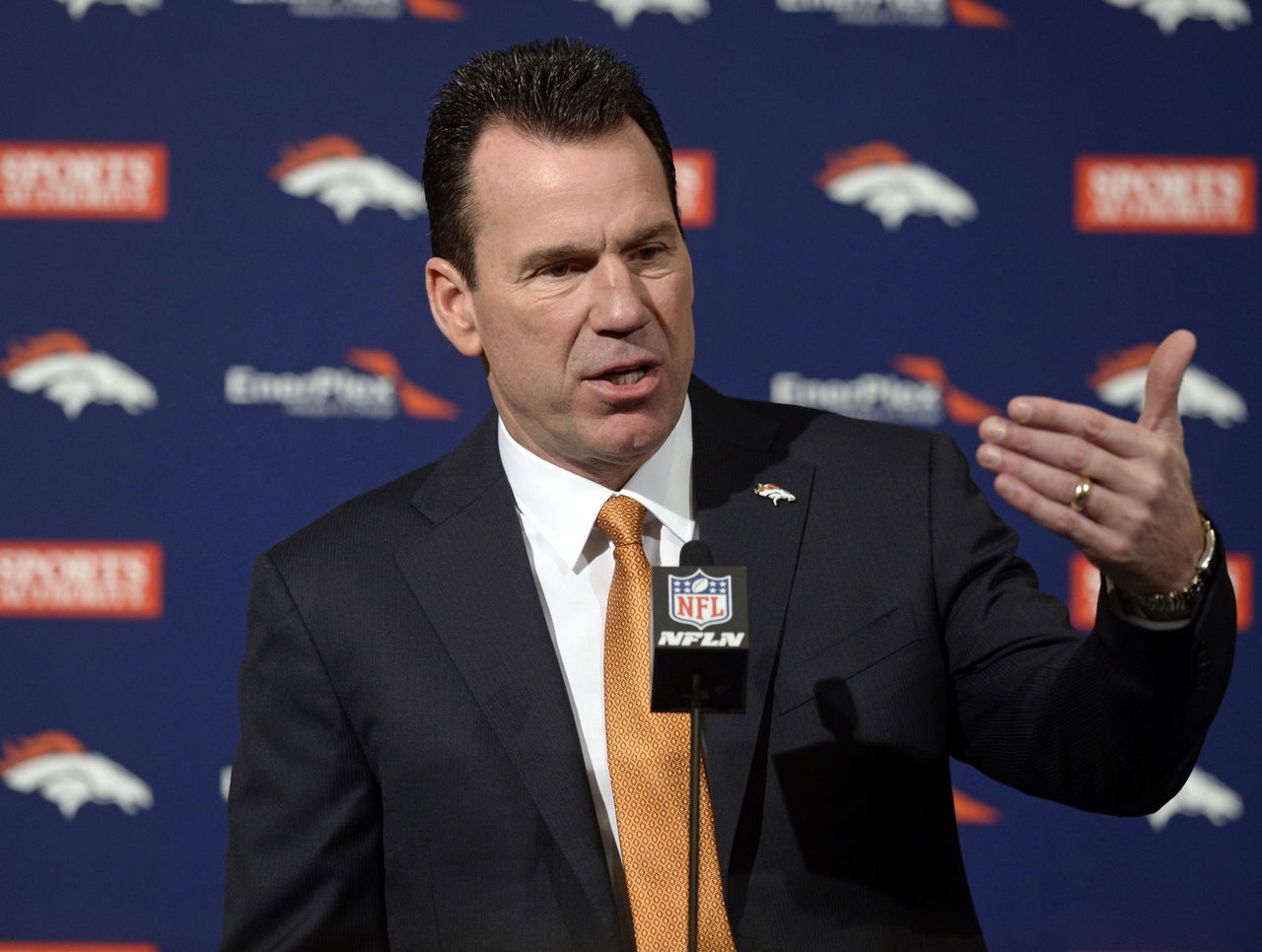
Kubiak was the offensive coordinator of the Broncos from 1995-2005 under Shanahan. Before that, he was Elway's backup quarterback, roommate and good friend. When Elway - now GM and VP of Football Operations in Denver - fired John Fox, it was a match made in heaven to bring in Kubiak.
Kubiak brought in his long time assistant Dennison to serve as his OC. Throughout his coaching career in Denver, as the HC of the Houston Texans and as the OC in Baltimore last season, Kubiak implemented the same zone-run, play-action, bootleg scheme that Shanahan was successful with.
Throughout the preseason there was speculation as to how the Broncos offense would be constructed with Peyton Manning. Manning, of course, has basically been his own coordinator throughout his career - running his no huddle, up-tempo, spread offense.
In Week 1, Manning looked incredibly uncomfortable under center - something he's rarely done in his career. The Broncos have a very weak offensive line - specifically at the tackle position with Ty Sambrailo and Ryan Harris - and Manning was never given the time to set his feet, plant and deliver strong and accurate passes. Denver won 19-13 thanks to their stout defense under Wade Phillips.
The hope with the new offense was to establish a strong running game with C.J. Anderson as the bell cow back, but he only managed 29 yards on 12 carries against Baltimore. On Thursday night against the Chiefs, Anderson once again struggled, gaining 27 yards on 12 carries. The Denver offense looked abysmal to begin the game until they shifted back to "The Peyton offense" where they took off and won 31-24.
If Kubiak becomes too stubborn to fully hand the reigns on offense to Manning, then the entire Bronco offense - including Demaryius Thomas, Emmanuel Sanders - are in serious trouble from a DFS standpoint. However, if Kubiak and Dennison let Manning do his thing, there's no reason why he, Anderson, Thomas and Sanders shouldn't remain the DFS studs they were a year ago.
Baltimore Ravens OC Marc Trestman
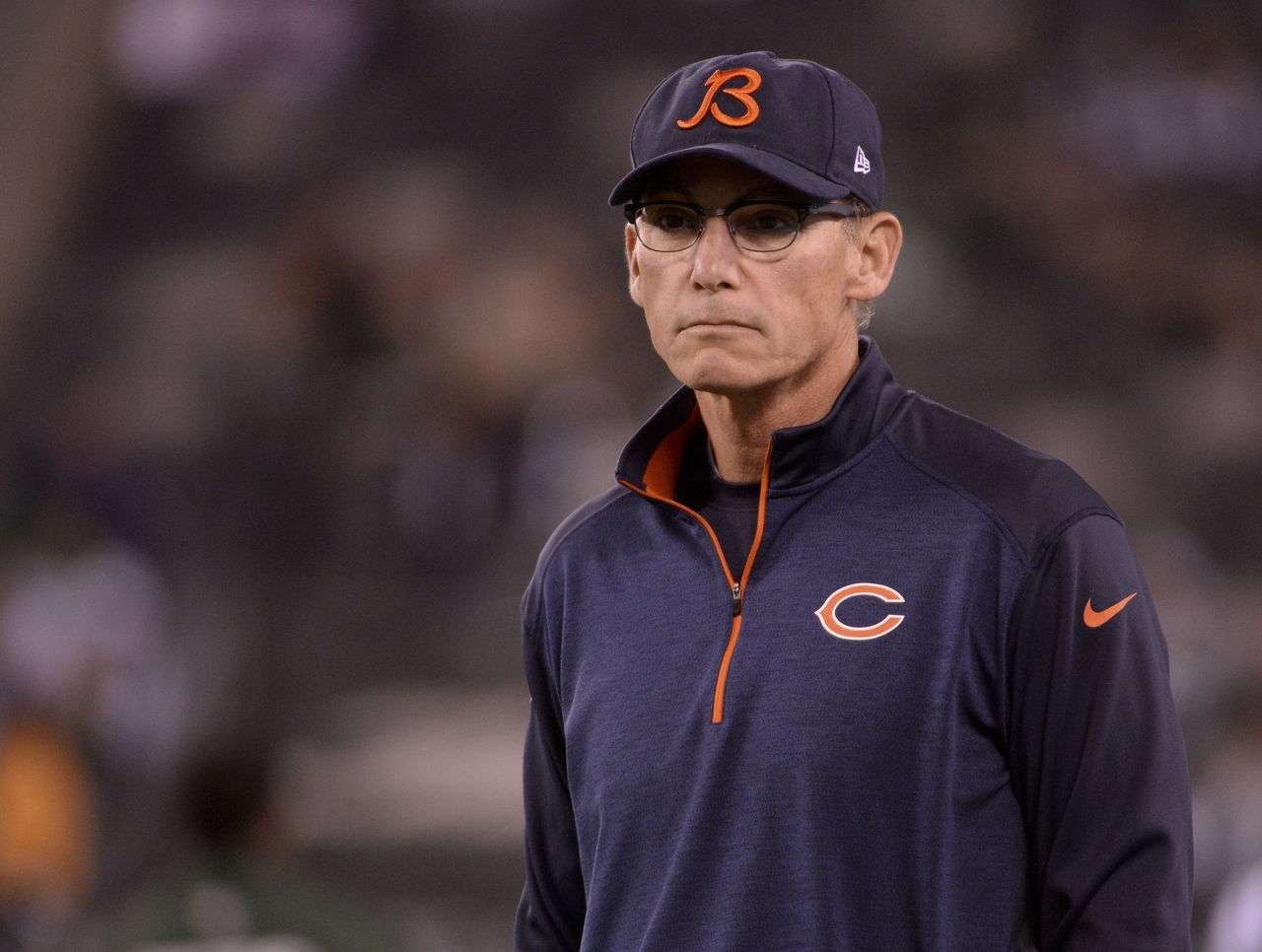
Though it's early to tell after only two games, but the Ravens could be in serious trouble this season. A low scoring defeat to the Denver Broncos where the offense didn't muster together a single touchdown followed by an ugly 37-33 loss at the hands of the Oakland Raiders have Ravens fans worried. A 33 point performance is promising, but it did come against a weak defense.
The offense is going through a bit of a makeover. Last year's team committed to a run-heavy approach under Kubiak as the OC. Now, with "The Quarterback Whisperer" Trestman at the helm, things are a little bit different.
Throughout his tenure as the head coach of the Chicago Bears, Trestman loved to throw the football. Some fans wondered why Matt Forte saw a reduced amount of carries even though he was still used heavily in the passing game. He put together a pretty dynamic offense despite having Jay Cutler as his QB, though, he did have two monsters in Alshon Jeffrey and Marshall at WR.
If the Ravens are going to go full-in on the air attack with Trestman, they will have to rely on the aging Steve Smith Sr. as the main threat. Other than Smith, Joe Flacco will be counting on the group of TE Crockett Gillmore and WRs Kamar Aiken and Marlon Brown until rookies TE Maxx Williams and WR Breshad Perriman can prove themselves. Perriman, last year's first round pick, has been sidelined with a knee injury since training camp.
It remains to be seen whether Flacco can be successful as quarterback throwing the ball close to 40 times a game, much like Cutler did in Chicago. If the defense continues to allow points like they did against Oakland, it would help the DFS value of Smith and Gillmore, but they should be left alone against the Bengals in Week 3.
As for RB Justin Forsett, it's hard to imagine him coming anywhere close to his 2014 numbers where he piled up 1,266 yards and eight touchdowns. You think he'd be involved in the receiving game like Forte was, but the journeyman RB has only 25 receiving yards so far. To top it off, he might be in danger of losing goal line carries to Lorenzo Taliaferro.