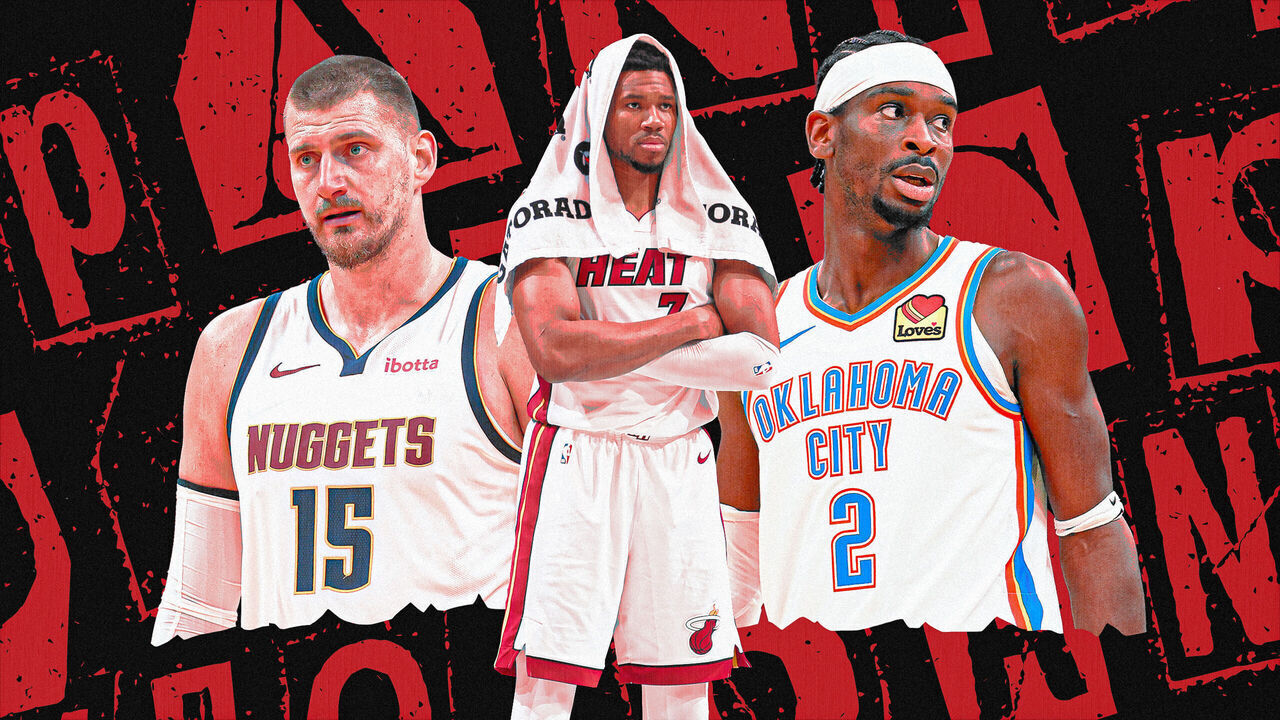
It's too early in the NBA season to draw any sweeping conclusions, but fans can be extremely reactive, and a third of the league already has cause for concern.
This isn't just a list of teams playing bad basketball. Here, you'll find clubs off to ominous starts while facing real expectations and high stakes. The Kings, Bucks, Jazz, Bulls, and Clippers share the league's worst record, but how many of those fan bases are really panicking? All of those teams were expected to languish near the bottom of the standings. Even some terrible teams without control of their first-round draft picks - like Milwaukee, Brooklyn, and the Clippers - are simply living up (or down) to expectations.
Meanwhile, Utah had grander ambitions, but between Jaren Jackson Jr.'s injury, some intriguing prospects, and a boatload of surplus picks in the coming years, no one in Salt Lake City should be losing sleep. We can't say the same for fans of the following teams.
Note: Panic meter ratings are out of five
Miami Heat (3-6)
Panic meter: 😟😟😟😟😟
This couldn't have been what Pat Riley, Erik Spoelstra and Co. envisioned when the Heat traded Tyler Herro, Jaime Jaquez Jr., Kel'el Ware, Kasparas Jakucionis, three first-round picks, one first-round swap, and a second-rounder for Giannis Antetokounmpo (and Bobby Portis), then signed Klay Thompson and Tim Hardaway Jr. in free agency.
Even for those who saw the obvious playmaking and off-the-dribble limitations of Miami's new-look roster, this level of futility has been shocking.
The Heat are 1-4 with an average point differential of minus-14.2 against winning teams. They lost in Charlotte. They dropped a home game to Dallas despite a 29-point triple-double from Antetokounmpo. And they squeaked by a terrible, injury-ravaged Clippers team in overtime.
Given the club's aforementioned offensive flaws and the tricky fit between Antetokounmpo and Bam Adebayo, Miami's 19th-ranked attack isn't surprising. But it seems unfathomable that a team starting The Greek Freak and Adebayo in the frontcourt and Davion Mitchell in the backcourt owns a bottom-five defense. Heat fans can only hope it's a matter of unsustainably bad shooting luck, as Miami's defensive shot profile ranks fourth in expected efficiency, according to Cleaning The Glass.
It needs to stabilize soon. How deep a hole would Miami have to dig before Antetokounmpo's future comes into question again? The 10-time All-Star has only a player option remaining beyond this season.
In the meantime, keep an eye on Andrew Wiggins' starting spot. The veteran has looked passive and disengaged on both ends, with third-year swingman Pelle Larsson taking more of Wiggins' minutes by the day.
Orlando Magic (2-6)
Panic meter: 😟😟😟😟
The Magic have a massive problem. They boast the fifth-most expensive roster but the sixth-worst record. They control their own first-rounder only once in the next four years, but the core they've spent so many dollars and picks on rarely plays together. Since wagering a fair chunk of its future on the premise that Desmond Bane's shooting could grease its offense enough to jolt it into contention, Orlando has seen Bane, Paolo Banchero, Franz Wagner, and Jalen Suggs suit up together just 21 times in 90 tries.
With franchise star Banchero (ankle) and two-way floor general Suggs (knee) currently sidelined, the Magic have piled up an alarming number of turnovers and blowout losses. Opposing defenses have mostly sold out to trouble Wagner, and it's worked. Wagner's doing all he can (averaging 19.6 points, 8.5 assists, and 6.4 rebounds), but his inefficiency and high turnover rate reflect an anemic squad overall.
At a certain point, the numbers don't lie. The banged-up version of the team is really this bad, and expecting the Magic to ever be whole for long stretches feels like wishful thinking. They also haven't exactly set the world on fire at full strength.
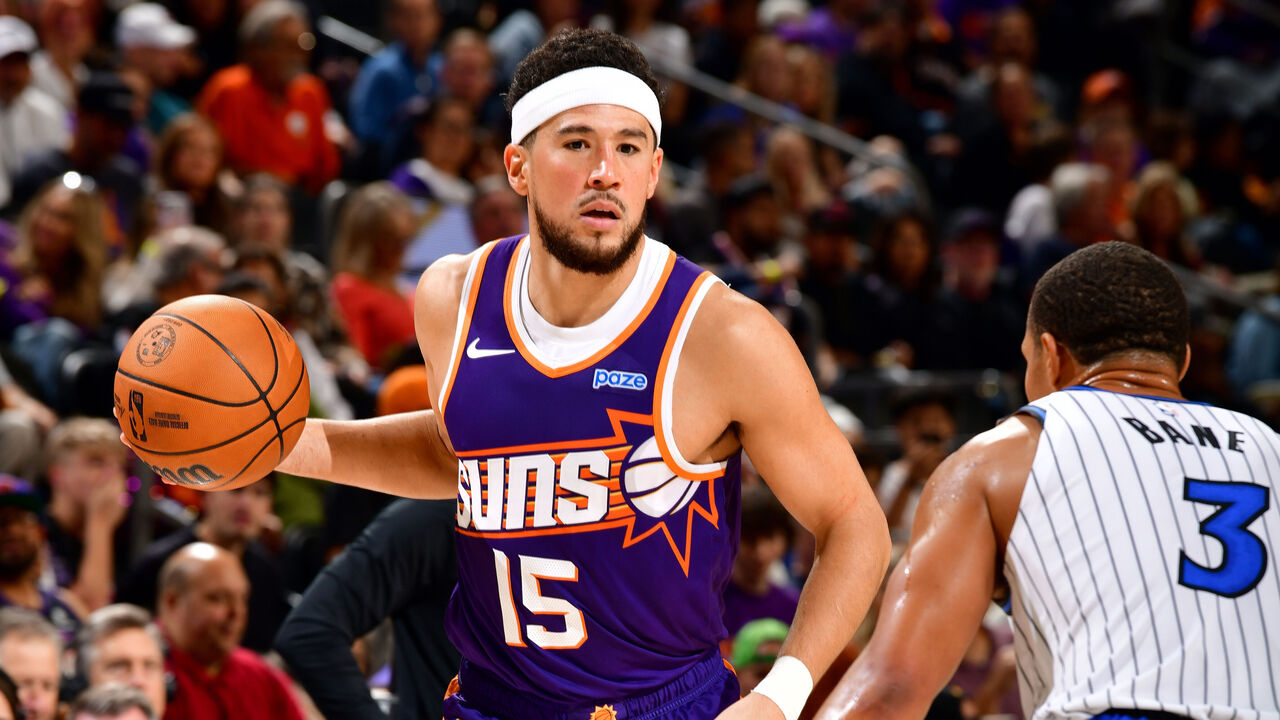
Phoenix Suns (2-5)
Panic meter: 😟😟😟😟
No one outside of Phoenix expected the Suns to make serious noise, but they were supposed to compete for a playoff spot again after an inspiring 45-win campaign. The Suns spent money this summer to ensure it, paying up to re-sign a bunch of the players who helped them overachieve last year.
Unfortunately, Phoenix has looked more like the hopeless team we expected last season than the scrappy squad it ended up becoming. Most concerning is that a team built to rely on defense and toughness owns the league's second-worst D and seventh-worst point differential.
This is where I remind you that the Suns inexplicably doubled down on this squad by trading an unprotected first-round pick, Grayson Allen, and Royce O'Neale for Miles Bridges - easily one of the worst trades in recent memory. Phoenix controls just one of its first-rounders over the next seven years (2032), and it's not even tradable (only swappable).
It was one thing when the Suns - who can't benefit from tanking - looked like they were going to field semi-competitive teams around Devin Booker. But if the first seven games are any indication, Phoenix is just going to be a sad watch until either Booker abandons his plans to be a Sun for life or his $250.7 million becomes untradable anyway.
Perhaps the only sliver of hope is that Phoenix has played one of the league's toughest schedules and dominated in its first game against a losing club (Orlando).
Oklahoma City Thunder (6-2)
Panic meter: 😟😟😟
The Thunder are the one team here whose inclusion has nothing to do with their play.
The preseason championship favorite has been decimated by injuries. Jalen Williams suffered the type of catastrophic leg injury that can be just as professionally devastating as it is emotionally. Cason Wallace needed surgery to repair a torn labrum. Chet Holmgren is out 8-10 weeks with a knee injury. And Alex Caruso has already missed time with an ankle sprain. A couple of weeks into the season, the Thunder already found themselves without their second- and third-best players, three-fifths of their starting lineup, and about half their rotation.
Caruso and Holmgren will eventually return, but losing Williams and Wallace is likely enough to derail OKC's title hopes. Williams' presence is often the difference between the Thunder looking like a juggernaut and an inevitability. His combination of size, three-level scoring, playmaking, and physicality is virtually impossible to replace. Meanwhile, Wallace's development was supposed to help the team overcome the loss of defensive stud Lu Dort.
The emergence of Ajay Mitchell, in addition to rookies Aday Mara and Bennett Stirtz, will help, but Oklahoma City's depth had already taken a hit due to apron-related trades. Shai Gilgeous-Alexander and a solid supporting cast of two-way role players will keep the team afloat - and SGA should threaten for a third straight MVP award - but the Thunder no longer have the secondary scoring or size on the wing to survive four rounds of playoff basketball. And whether it's because of apron restrictions or the structure of their existing contracts, acquiring another impact player will be tough to do without trading away one of their stars.
It's easy to say the Thunder will just run it back next year and pray to the basketball gods for better injury luck. But when you're already in championship-or-bust mode and the second apron looms, every title-less season feels like the end of the world. Plus, given ownership's history, we shouldn't just assume Oklahoma City will keep the band together.
Cleveland Cavaliers (4-4)
Panic meter: 😟😟😟
The first of three .500 East contenders we'll spotlight today, the Cavs have caused the most concern, and understandably so. Unlike the Knicks, Cleveland has no championship proof of concept for this expensive and entrenched roster. And unlike Toronto, the Cavs don't have the excuse of a superstar's absence.
Cleveland has been one of the league's healthiest teams to start the year - its top six players have missed a combined two games - yet the 2026 East finalists haven't looked great against fellow championship hopefuls. The Cavs blew a 29-point lead in Philadelphia to open the season, and they were thoroughly outclassed by the injury-ravaged Thunder in back-to-back losses this week.
Donovan Mitchell and Evan Mobley have been solid enough, but there are some serious red flags in James Harden's game. The future Hall of Famer has always played at his own pace, but at 37, he looks less explosive than ever, and his trademark efficiency has abandoned him. Harden's 40% two-point shooting and 54.9% true shooting percentage are both the worst marks of his career. In addition, free-agent acquisition Peyton Watson - currently nursing a hamstring injury - is averaging 10.8 points on 37/17/79 shooting splits.
Mitchell, Mobley, Harden, Watson, and Jarrett Allen are all under contract either through the end of the decade or into the 2030s, giving Cleveland minimal flexibility. The Cavs also don't control their own first-rounder until 2030. So far, this isn't the caliber of team that justifies the payroll or asset-commitment. If things don't turn around, something's got to give.
Denver Nuggets (4-3)
Panic meter: 😟😟
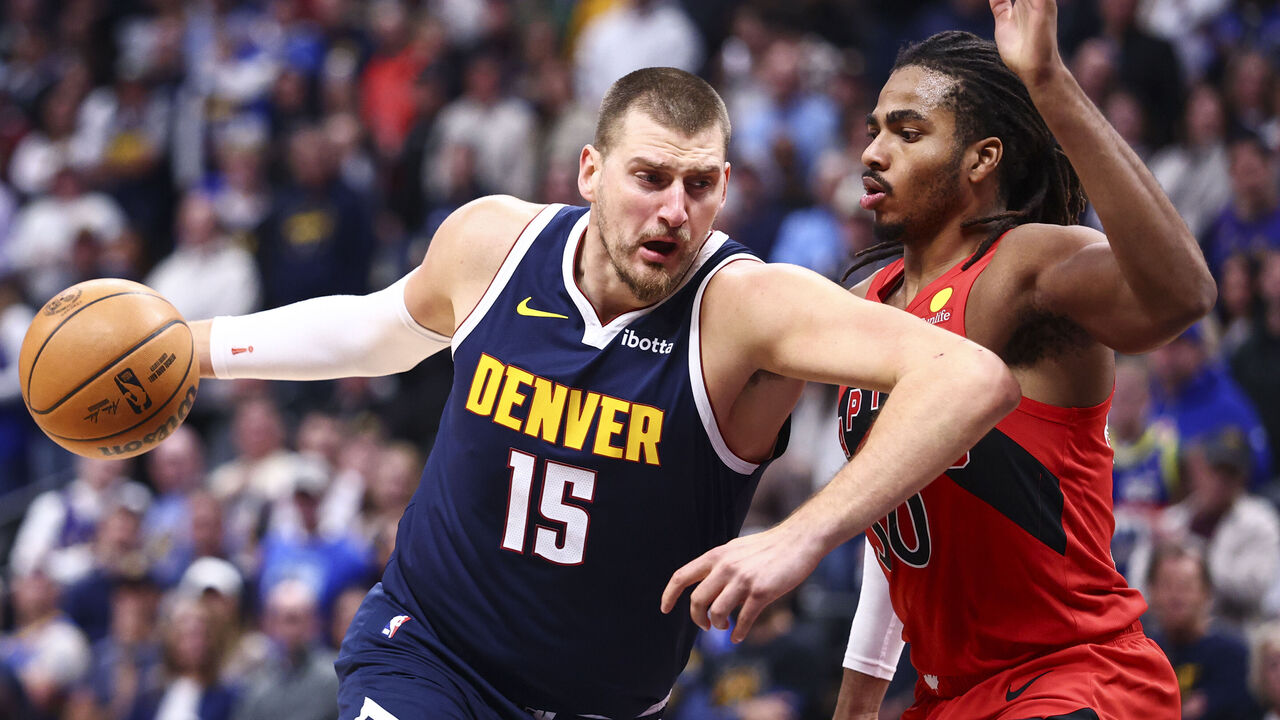
A roaring third quarter helped lift the Nuggets past the Raptors on Wednesday, which temporarily lowered the temperature in Denver. But there are real questions to ask of this team.
Nikola Jokic should be fine after a slow start to his season (as evidenced by his 32-point triple-double against Toronto), but the Nuggets lack the type of energy, athleticism, and defense necessary to truly contend. Even at 4-3, something just feels off. That's a problem for the league's only second-apron team, especially considering its franchise player - one of the premier stars of his generation - is a pending unrestricted free agent.
Jokic has repeatedly stated that he plans to re-sign in Denver, but until he puts pen to paper - and as long as the Nuggets have a dysfunctional feel about them - nothing should be taken for granted.
Indiana Pacers (3-6)
Panic meter: 😟😟
With a glass-half-full point of view on the Pacers, you'd note that four of their five starters have missed multiple games, Tyrese Haliburton looked great before suffering a hamstring injury, and they've got plenty of time to right the ship once they're back at full strength.
A glass-half-empty evaluation would say that the Pacers risk burying themselves early in a reloaded Eastern Conference, and hamstring injuries can linger long enough to derail an entire season (see Jalen Williams last year). Indiana doesn't have to get back to the Finals to consider this season a success, but the team needs to look like a contender after trading what turned out to be a top-five pick (Keaton Wagler) for Ivica Zubac. The Pacers are a long way from that level at the moment.
New York Knicks (4-4)
Panic meter: 😟
The Knicks are only five months removed from a championship and already responded to an 0-3 start with four wins in their last five games, so we won't get carried away here. But their uninspiring play still deserves a mention.
The offense has looked quite clunky for a team with so much continuity, and the starting five has performed second worst among the league's 30 most-used lineups even though New York has usually been at full strength. Josh Hart is the Knicks' only top-eight rotation player who's missed a game.
Combine all of that with the dark cloud of contract conflicts and the vibes suddenly aren't so immaculate at MSG.
Toronto Raptors (4-4)
Panic meter: 😟
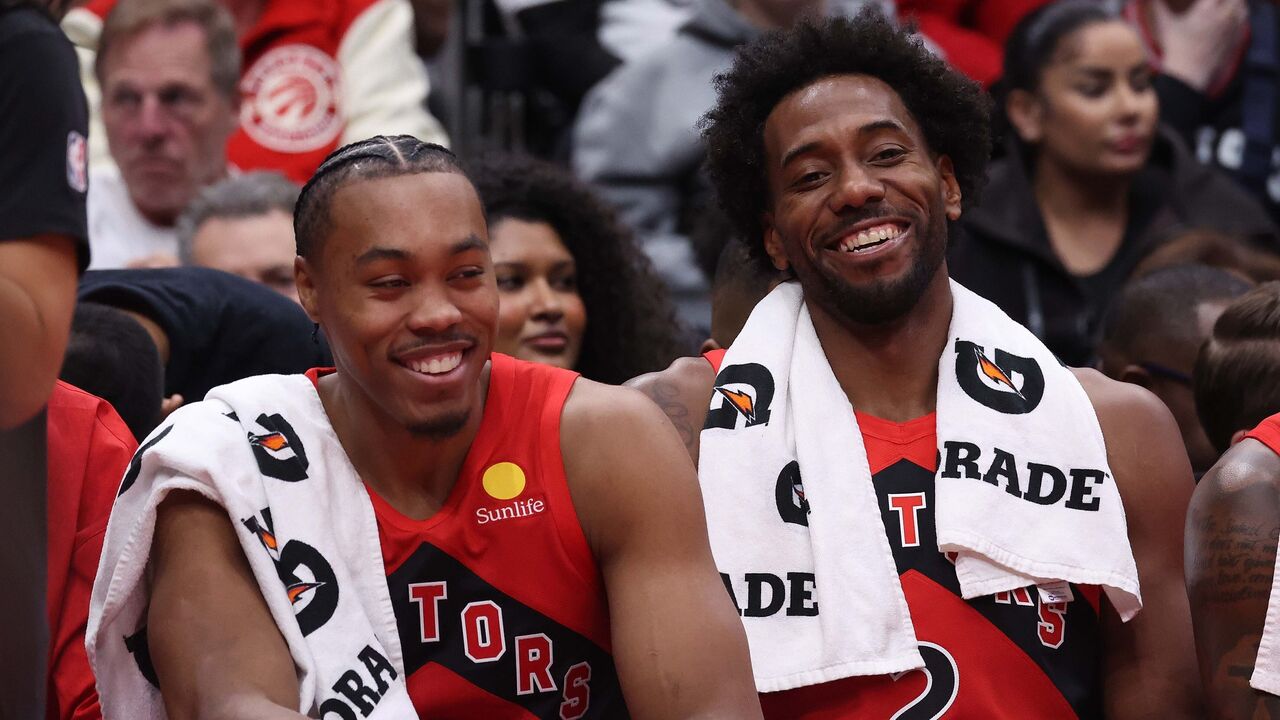
After a dominant defensive start, the Raptors cratered against improved competition, and the offense appears to be a superstar short. That's precisely why Toronto looked destined for mediocrity until trading for Kawhi Leonard, and precisely why the team mortgaged some of its future on the injury-prone and scandal-plagued legend.
From that perspective, you could argue that there's no reason to panic until Leonard returns. Even while looking like a shell of himself in the season's first two games, Leonard's advanced metrics still indicated he was one of the league's highest-impact stars. A more pessimistic outlook would emphasize the fact that all the flaws of a Leonard-less Raptors roster are still there, and the 35-year-old they traded for (and extended) only managed to play two games before a knee issue flared up.
Charlotte Hornets (3-6)
Panic meter: 😟
Everyone expected the Hornets to take a temporary step back after trading LaMelo Ball, but for those of us who believed Charlotte's decision to move on would prove wise, this has been a rocky start.
Ball's been playing some of the best and most mature two-way ball of his career in Minnesota. Meanwhile, sophomore Hornets cornerstone Kon Knueppel has managed just six minutes of action due to a hamstring issue that flared up again in his season debut. The play of fellow building block Brandon Miller, whom the Hornets recently extended for $208.3 million, has been up and down; he's dished out more turnovers than assists. Finally, veteran big man Naz Reid - acquired in the Ball transaction - was benched (for a half) by head coach Charles Lee for failing to meet the team's standards.
Charlotte's young talent and draft capital still suggest a bright future, but these are some notable early-season speed bumps.
Joseph Casciaro is theScore's lead NBA reporter.