
NHL general managers meet multiple times a year to discuss league matters and best practices. Coaches and equipment managers gather annually.
Representatives from hockey analytics groups across the NHL met in an official capacity for the first time ever in late March. The two-day event, hosted by the Avalanche and held inside Denver's Ball Arena, featured a slate of private meetings on Day 1 and a public-facing conference the following day. About 90 team employees were on hand, including at least one from 31 franchises.
During Day 2, Avalanche GM Chris MacFarland sat on a panel titled "Leveraging Data & Technology in Decision-Making Across Sports."
"We rely heavily on our crack analytics staff and the work they do on the draft side," MacFarland said when asked about evaluating prospects. "They create algorithms and programs to try and compare leagues (around the world)."

Across the continent, the Maple Leafs were holding a press conference as the panel unfolded. Maple Leaf Sports & Entertainment president and CEO Keith Pelley told reporters in Toronto that he wants the Leafs' next GM to be "data-centric." He then, unprompted, brought up artificial intelligence.
"AI is massive. It is changing our business," Pelley said. "The whole thing with data is, everyone now has access to data and everyone's going to have access to AI. It really comes down to how you utilize it and how smart you are with it."
AI is everywhere in 2026. It's rapidly reshaping how humans interact with technology, as "roughly one in six people worldwide" are now using generative AI tools, according to the Microsoft AI Economy Institute. Goldman Sachs Research estimates that "around 300 million jobs (globally) are exposed to AI automation." Pro sports teams aren't immune to the disruption.
theScore spoke with 10 people in and around the NHL to gain a better understanding of AI's current foothold in hockey and what's still to come.
Here's what we learned.
What's all the fuss about?
Primitive advanced stats, such as Corsi, Fenwick, and PDO, entered the mainstream hockey conversation in the late-2000s. Within a decade, virtually every franchise had hired multiple data-focused hockey operations analysts, and the hiring hasn't really stopped. Nearly 200 people now work in full-time data-focused roles across the NHL's 32 teams.
Several ownership groups have turned over during this period. The modern owner, often heavily reliant on data in whatever industry made them rich, tends to not be satisfied with merely dabbling in analytics. They're interested in hiring executives from nontraditional backgrounds. Among the increasingly eclectic crew of GMs is ex-chemist Eric Tulsky, ex-poker player Sunny Mehta, ex-commodities trader Chris Patrick, ex-corporate lawyer Julien BriseBois, and ex-player agent Kent Hughes. None of them played in the NHL.

Meghan Chayka is the co-founder of Stathletes, one of the main data providers for the NHL and its clubs. Her phone "blew up" with text messages from influential people, including owners, after Pelley's remarks about data.
"Everyone was basically like, 'We're looking for the same thing!'" Chayka said. "They're looking around and wondering, 'What am I doing wrong? How can I fix it? Who are the key players in the data space?' It's a bit of an arms race in terms of getting data contracts in line and also finding the executives truly capable of working with it all."
(It turns out Chayka's brother is one of the desired execs; John Chayka, former GM of the Arizona Coyotes, is reportedly a finalist in Pelley's search.)
The objective shouldn't be to hire the candidate with the fanciest credentials, said one NHL team executive who asked to remain anonymous in order to speak freely. Instead, owners should be chasing strategic decision-makers who are obsessed with finding competitive advantages.
"The biggest edge won't be what data you have or what tools you have," the executive said, echoing Pelley. "It'll be how decisions are made."
While the human element remains vital in 2026, data touches everything from player evaluation and contract valuation to coaching tactics and player development to biomechanics and sleep habits. A handful of teams have analytics groups of around 10 people. Chicago, for instance, lists a vice president, three directors, two senior research scientists, two data scientists, and one engineer as part of its "Hockey Strategy & Analytics" department.
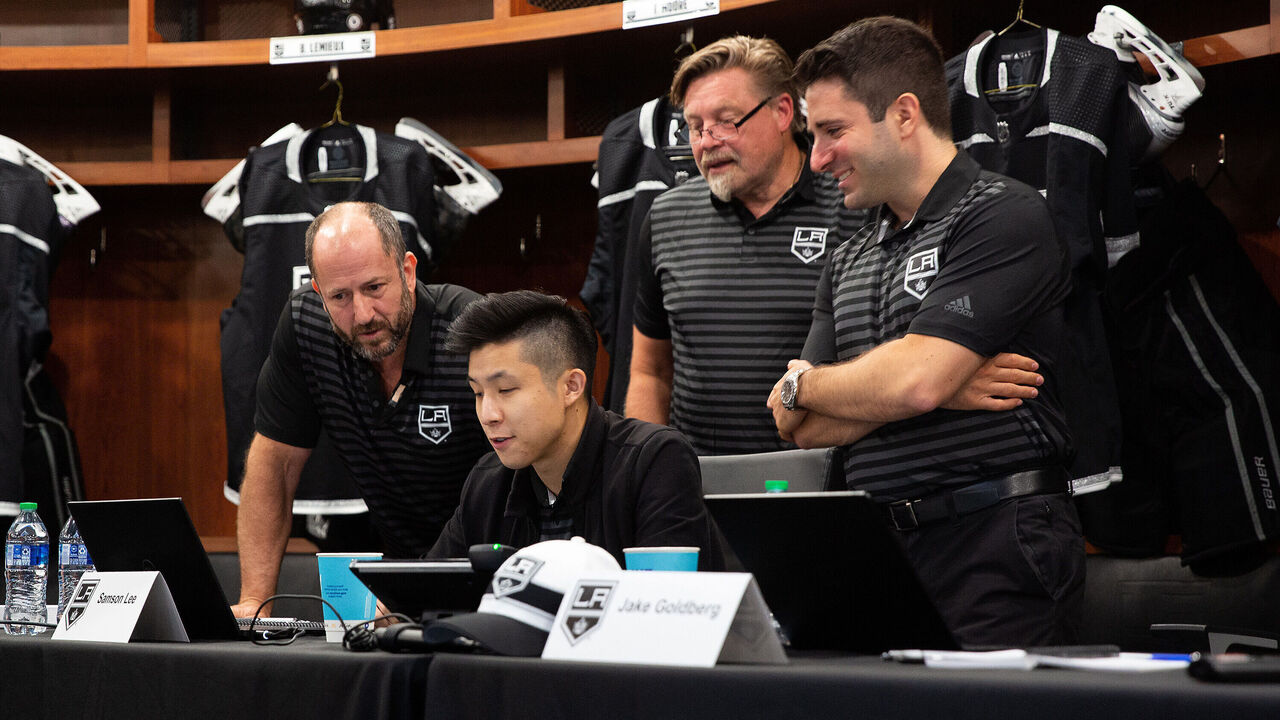
Like most industries, hockey's adjusting to the prevalence of user-friendly AI with a mix of amazement and overwhelm. Teams are trying to wrap their collective heads around the current and future powers of AI, in general, while theorizing how to best deploy those strengths in an environment in which winning a Stanley Cup is the ultimate goal.
"Everyone's still trying to figure it all out," one team's director of hockey analytics said. "We have way more work than we can handle right now," added a second director.
Teams are investing in AI through additional staffing and third-party vendor agreements to accomplish a few things. The most obvious use case is to boost productivity. AI can also identify blind spots and biases within hockey ops, analyze massive datasets with limited supervision, and guide decision-making.
GMs aren't turning to Claude for answers to franchise-altering questions (at least we don't think they are), but the manner in which data's collected, cleaned, coded, modeled, stored, and presented has been and will continue to change drastically.
Tasks that once took a human months to complete can be delegated to AI.
"The agentic AI movement is massive. What it's done is turn engineers into orchestrators," explained Kannon Price, director of growth and strategic solutions for Lumenalta, one of many AI-focused companies on hand at the conference in Denver.
"There's this 80-20 rule that has come about, where 80% of an engineer's or developer's time is spent orchestrating the different agentic bots that it has - telling it what tasks to start, what tasks to accomplish, and reviewing what they've done. Only about 20% of (the professional's) time is actually dedicated to coding now. The beauty of that is that it allows them to take on a bit more of a strategic role."
What's so special about new data?

The amount of total data available to teams has ballooned over the past five years, with the NHL's player and puck tracking system operating at full capacity since 2021-22.
Infrared microchips are imbedded in the puck and every player's jersey. The chips interact with cameras in the scaffolding of the arena to determine the precise locations of the puck and players at all times. Over the course of a full game, millions of data points are collected by league partner SportsMedia Technology (SMT).
Media and fans can peruse polished stats, such as skating and shot speeds, on NHL Edge, whereas teams have direct access to raw datasets. Each club tailors the data to its specific needs and wants, building proprietary statistical models and metrics with the help of AI.
Sportlogiq and Stathletes, two other major data providers, use computer vision and machine learning to track game events through broadcast feeds. These companies produce metrics like offensive zone puck possession, inner-slot shots, strength of opponent, shot assists, and scoring chance contribution.
The latest entrant in a competitive market is Sony-owned Hawk-Eye Innovations. The NHL's longtime video replay technology partner has started collecting skeletal data on players and sticks through a complex camera system. At any given moment, Hawk-Eye can locate 29 points on a player - hands, wrists, elbows, shoulders, etc. - and another four on a stick. Teams could have access to Hawk-Eye's highly anticipated raw data as early as next season, according to league sources.
"Coming out of the conference, skeletal data is the big one," one director said. "There's applications to really enhance the information sets we have now."
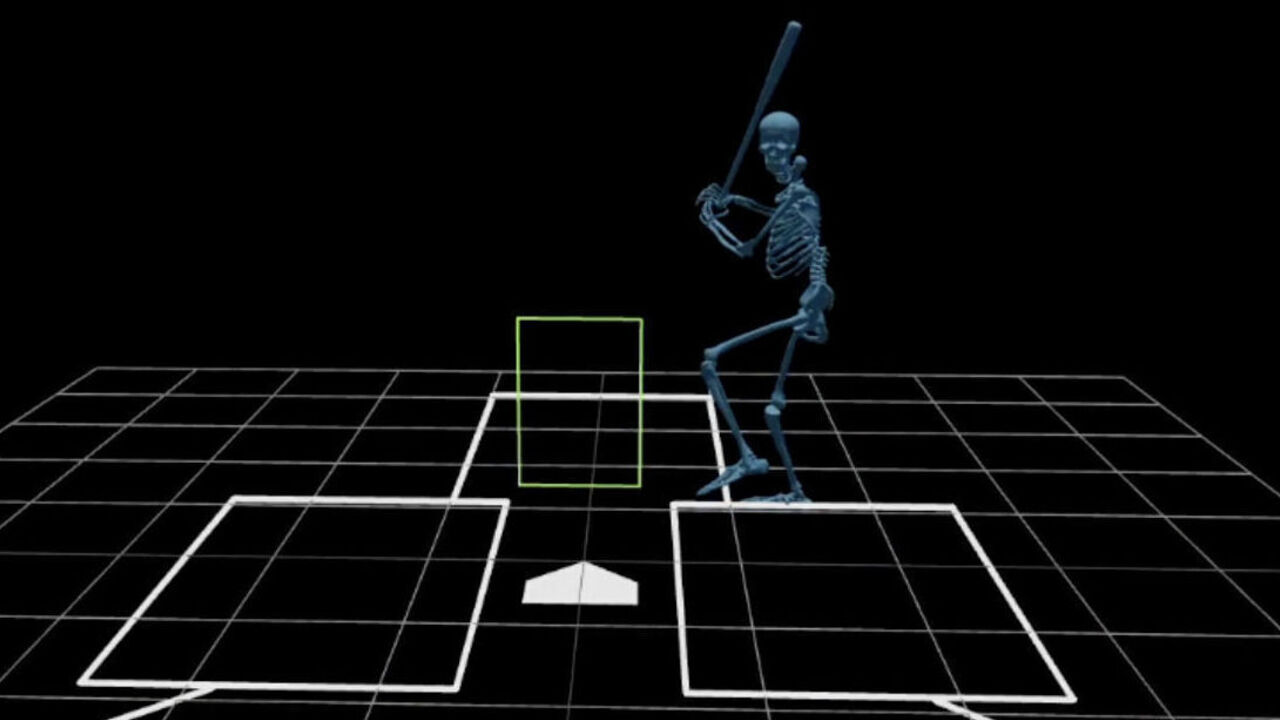
Skeletal data is prevalent in other sports, most notably baseball. Will having granular data about how the body moves lead to better analysis around injuries? Will an enterprising team install Hawk-Eye cameras in its practice and AHL rinks in an effort to turn those facilities into mini laboratories for improving skating strides and shooting techniques?
Goaltending has always been an underserved corner of hockey analytics. Skeletal data will theoretically help teams better evaluate a goalie's hockey sense, vision, movement, and workload. If a goalie looks less agile in the crease, for example, an analytics group can one day soon provide the GM with data that supports or refutes the eye test.
Teams are excited to be fed a mountain of fresh, compelling data. However, they must ingest it properly and then avoid making sweeping judgements early on. It will likely take a few years before media and fans begin to notice the impact of Hawk-Eye technology on the on-ice product, said Wyatt AI CEO and founder Josh Smith, who's worked with skeletal data in professional soccer.
Wyatt, a Montreal-based company run by three PhD-wielding physicists, is new to hockey, but it's been working with the Avalanche on a trial basis for the past year. The company ingests player and puck tracking data into its back-end pipelines and develops unique metrics, including "packing" (which quantifies a passer's vision) and "pressure" (which measures a puck carrier's ability to execute under defensive pressure).
Packing and pressure focus on spacing and player movement. Wyatt works on these metrics by leaning into AI tools and physics-based modeling.

SMT operates similarly but on a much larger scale as an official NHL partner. The company absorbs the player and puck tracking then runs the data through a series of algorithms to produce around 750 stats. Teams are hungry for defensive analysis, or what's happening away from the puck, but it's often difficult to associate intent, said Curtis Harvey, a product manager for SMT.
One of SMT's most illuminating puck-related metrics is "total danger," a catchall stat that builds on the concept of expected goals.
"Total danger is taking in all of the player and puck tracking data and associating values as teams and players move up the ice or make decisions," Harvey said. "On an expected goal, you're not going to get credit for the guy who made the outlet in their own zone to get up to the zone."
A decade ago, teams used shots on goal and scoring chances to assess single-game performance. Nowadays, expected goals share and game score, another catchall stat, paint a fuller picture. Perhaps in a few years, head coaches will be referencing total danger when addressing players, staff, and reporters postgame.
Will data and AI divide the league?
The modern NHL player is data savvy. He wears an Oura Ring or Apple Watch. His heart rate and energy level are monitored during practice through other wearable tracking technology. Surely, some have undergone genome testing.
While there are hurdles preventing teams from collecting medical information - for one, the NHL Players' Association will always have a say - the anonymous NHL team executive believes that tons of useful data could be mined from it. Optimizing player sleep patterns to minimize fatigue would be one logical starting point.
"Improving individual player outputs is less sexy than having some secret formula to acquire better players from other teams," the executive said. "But, in a lot of cases, it might actually have a bigger impact on wins and losses."

The executive is very bullish on AI. Implementing one or two data-driven processes, or having an analytics group take advantage of a few AI tools, won't be enough for a president or GM moving forward, according to this particular executive. Teams, in his view, need to be aiming at a "north star."
"It's a north star based on how you're going to gain edges over the other teams in many different areas," he said. "There's this competitive advantage window that's opened because of AI, and it's going to close relatively quickly."
Data needs to flow through organizations seamlessly, the executive continued. He predicts that franchises acting as if it's business as usual will be left behind within a few years. The old decision-making framework is antiquated.
"How do you deal with uncertainty and risk? How do you make your decisions probabilistically rather than definitively? Do you evaluate outcomes in a binary way, or in a more probabilistic way? Are you using some form of expected-value thinking or asset framework, or are you thinking reflexively?" he said.
"These two mindsets are very different. The modern organization, to me, has a way bigger requirement to act smartly and decisively with this emerging technology coming to the forefront. And I think most teams are unprepared."
John Matisz is theScore's senior NHL writer. Follow John on Twitter/X (@MatiszJohn) or contact him via email ([email protected]).