If you're looking to dominate your fantasy football league, it may be time to consider a bit of a different approach.
Fantasy football strategy - particularly in the early rounds - has largely been about nabbing as much running back value as possible. It was only a few years ago that rushers occupied all 12 spots in the majority of first-round mocks.
That trend has since been quelled by a combination of fewer elite running backs and a fundamental shift in offensive strategy around the league. These days, it's great to land a blue-chip fantasy running back - but it's ultimately not critical to winning a fantasy championship. In fact, you may stand a better chance by leaving the position alone until later in the draft.
Enter the Zero RB strategy.
Forte? McCoy? AP? Who needs 'em?
As the name suggests, The player employing this strategy is entirely eschewing the position in the early rounds in favor of a WR-heavy approach. And while that doesn't necessarily mean using the No. 1 pick on Calvin Johnson or Dez Bryant over Jamaal Charles or LeSean McCoy, it does provide an intriguing draft path for players outside the top-4.
With help from the ADP numbers published on FantasyPros, we can build a sample team using the Zero RB strategy for anyone drafting from spots 5-12. Here's an example of what that team might look like for the drafter with the seventh pick in a standard 12-team snake draft:
Round 1: Jimmy Graham, TE, Saints
Round 2: Brandon Marshall, WR, Bears
Round 3: Vincent Jackson, WR, Bucs
Round 4: Wes Welker, WR, Broncos
Round 5: Cam Newton, QB, Panthers
Round 6: Shane Vereen, RB, Patriots
Round 7: Steven Jackson, RB, Falcons
Round 8: Pierre Thomas, RB, Saints
Round 9: Danny Woodhead, RB, Chargers
Round 10: DeAngelo Williams, RB, Panthers
Round 11: DeAndre Hopkins, WR, Texans
Round 12: D/ST, Texans
Round 13: Dan Bailey, K, Cowboys
Regardless of what you think of the variety of mini-strategies employed here - including the selection of Graham at No. 7 and the choice of veteran RBs over rookies - the main roster framework adheres to the Zero RB philosophy: namely, no rushers in the first five rounds.
So what do you end up with in this scenario? Almost always, you'll land three difference-making wide receivers, an elite tight end and a top-end quarterback within the first five rounds. From there, roster construction should focus on nabbing two RB anchors - guys you feel comfortable starting on a regular basis - and anywhere from 2-4 RB lottery tickets (under-the-radar veterans, high upside backups, rookies, etc.)
In the above example, the drafter lands two No. 1 WRs, a No. 2 with low-end No. 1 upside in a PPR, the best tight end option in football - ostensibly a WR1 himself - and a top-6 QB. The drafter is significantly better than league average at two positions, with the potential to be slightly better than league average at QB. Defense and kicker are crapshoots, so they're irrelevant to the conversation. Essentially, the only weakness is at RB.
Week 1 RB deficiency? Meaningless
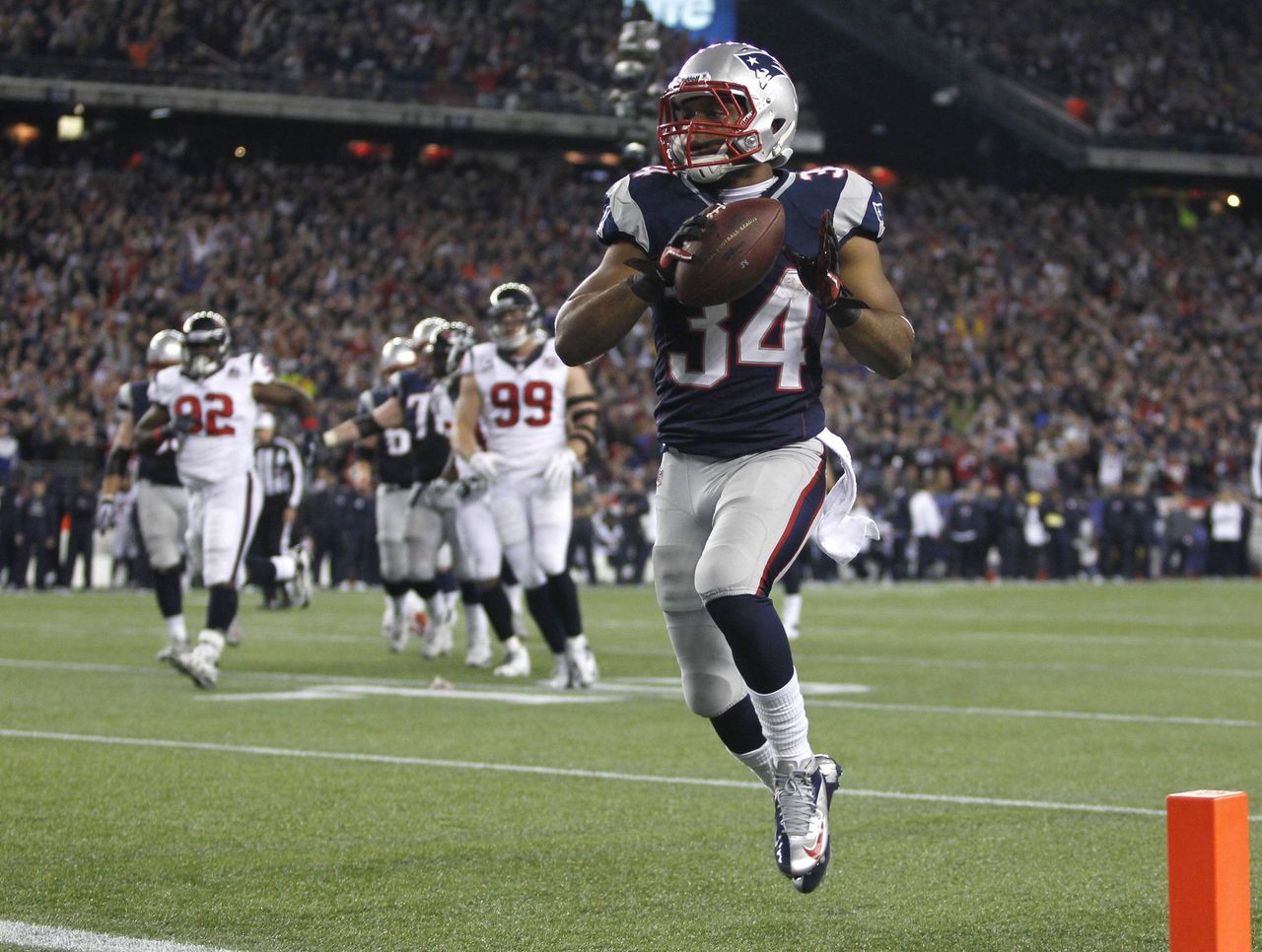
"But look at that deficiency at RB," you might be thinking - and you're right. As of Week 1, the drafter is behind the curve at that position. But when was the last time the running back landscape remained consistent for the entire season? How about the first eight weeks? Or even the first four?
The running back position is always the most volatile in fantasy football. Starters get hurt. Others get demoted. Rookies and backups rise to prominence. In essence, RBs are a little like closers in fantasy baseball; the very best may indeed wind up being the best, but the variance among the rest is vast and unpredictable. And even the best get hurt sometimes.
In the above example, RBs were selected based on their odds of providing the drafter with RB2 value. It's safe to project that none of them will end up at RB1, but any of Vereen, Jackson or Thomas could slide into RB2 contention with an injury to a teammate or a boost in touchdowns. If the drafter's top five picks all wind up near their predicted stats for the year, a pair of RB2s is all that's needed to contend for the fantasy title.
And this roster can get even better if the drafter can smartly work the trade beat and waiver wire. Buying low, selling high and being active in grabbing waiver-wire RBs thrust into exciting new opportunities is a must in the Zero RB system, but it only takes one well-timed move to significantly enhance the roster.
PPR? Even better
The Zero RB system is even more effective in PPR leagues. Using the above example, Graham, Marshall, Jackson and Welker combined for 337 catches; all four finished in the top-30 in that category, and all are expected to be popular targets for their quarterbacks again in 2014.
The chances of an opponent's top three WRs and TE combining for that many catches is infinitesimal. Going WR-WR-WR-TE with your first four picks not only ensures plenty of receiving yards and touchdowns - it provides a significant PPR advantage that effectively negates the disadvantage of not having an RB1.
No system is infallible, this one included - and the drafter still needs the right combination of diligence and luck to make it work. But for those looking to buck the antiquated RB-heavy trend and build a roster with a better chance of overall success, the Zero RB strategy is far and away the best of the bunch.