How can long-distance skiers and skaters recover so quickly?
Among the most visually striking images to emerge from the Sochi Olympics are the shots of cross-country skiers collapsed in utter exhaustion after finishing races.
Pushing one's body to the point where remaining upright isn't an option, all in the name of Olympic gold and national glory, is commendable, but what's truly remarkable is that many of these athletes do it multiple times over the course of only a few days. Similarly, it's common for speedskaters to compete in several grueling long-distance races in short order.
For distance runners competing in the Summer Olympics, such rapid recovery is the stuff of science fiction -- or banned performance-enhancers, at least.
How do winter endurance athletes recover so rapidly? Chris Gorski of Inside Science explains that cross-country skiing and speedskating are more similar to cycling and swimming than they are to running. Gliding on ice and snow greatly reduces the impact absorbed by joints and muscles, leading to far shorter recovery times.
The science of Nordic skiing and speedskating also explains how many athletes are able to excel at both short and long distances.
While it's commonplace for top skiers and speedskaters to succeed in both sprints and long-distance races, the idea of a 100m star like Usain Bolt also competing for a medal in the 10,000m is absurd. Consider the vastly different physiology of Bolt and distance runner Mo Farah:
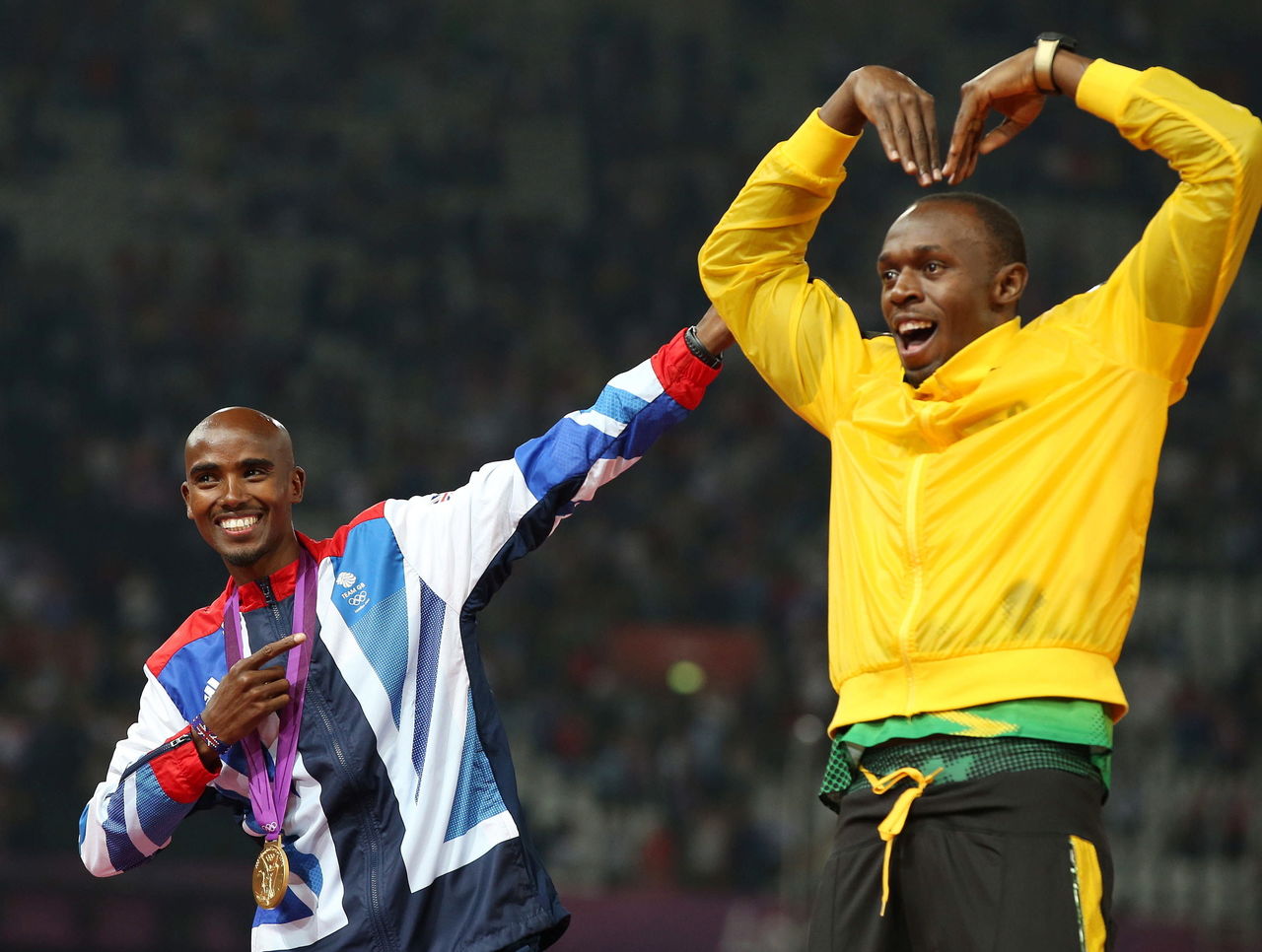
[Courtesy: Action Images]
"If you've got great [skiing] technique for 1,500 meters, you've got great technique for 50 kilometers," Stephen Seiler, a Norwegian exercise physiologist explains. "So the difference in speed between those two is much smaller than you would think it would be."
Seiler says he envisions a future where training for these events becomes so advanced that separation emerges between athletes specializing in sprint and distance races (and we've seen some of that at the Sochi games already), but it's highly unlikely we'll ever see a divergence between the two resembling what we see in track and field.