Plenty of podiums, but where's the gold? Canada's Olympic vibes aren't great
More than halfway through the Milan Cortina Olympics, Canada isn't so much owning the podium as leasing a room on one of its lower floors.
The medal count for a country that's become a Winter Olympic power finally entered the double digits Monday morning: Short track speedskater Courtney Sarault won silver in the women's 1,000 meter for Canada's 10th podium finish (and Sarault's third in Milan).
That's a reasonable total. With most of a week left, Canada could still end up at or above 25 medals - in line with its pre-Games expectations.
But Canada's story at the 2026 Games still feels like an Olympics of "almost" and "not quite." Mikael Kingsbury, the moguls legend, mercifully won his country's first gold medal Sunday in the dual moguls event, but that only tied Canada with Brazil and Kazakhstan in gold-medal finishes. Australia has three. Great Britain has three. While much of Canada is knee-deep in snow, we're getting beaten by Commonwealth countries that get somewhere between none and very little of it.
Some of the disappointments are down to the nature of Olympic events that have incredibly narrow margins. Kingsbury tied for first place in the regular moguls event last week but lost the gold to Australia's Cooper Woods on a tiebreaker. You could watch a lot of moguls races and never know there was a tiebreaking process, such is the rarity of a deadlock.
Eliot Grondin won silver in the snowboard cross by three one-hundredths of a second. Grondin seemed to do everything perfectly, lurking behind the early leader and then bursting into the lead when the finish line was in sight, but he was pipped at the end in gut-wrenching fashion.
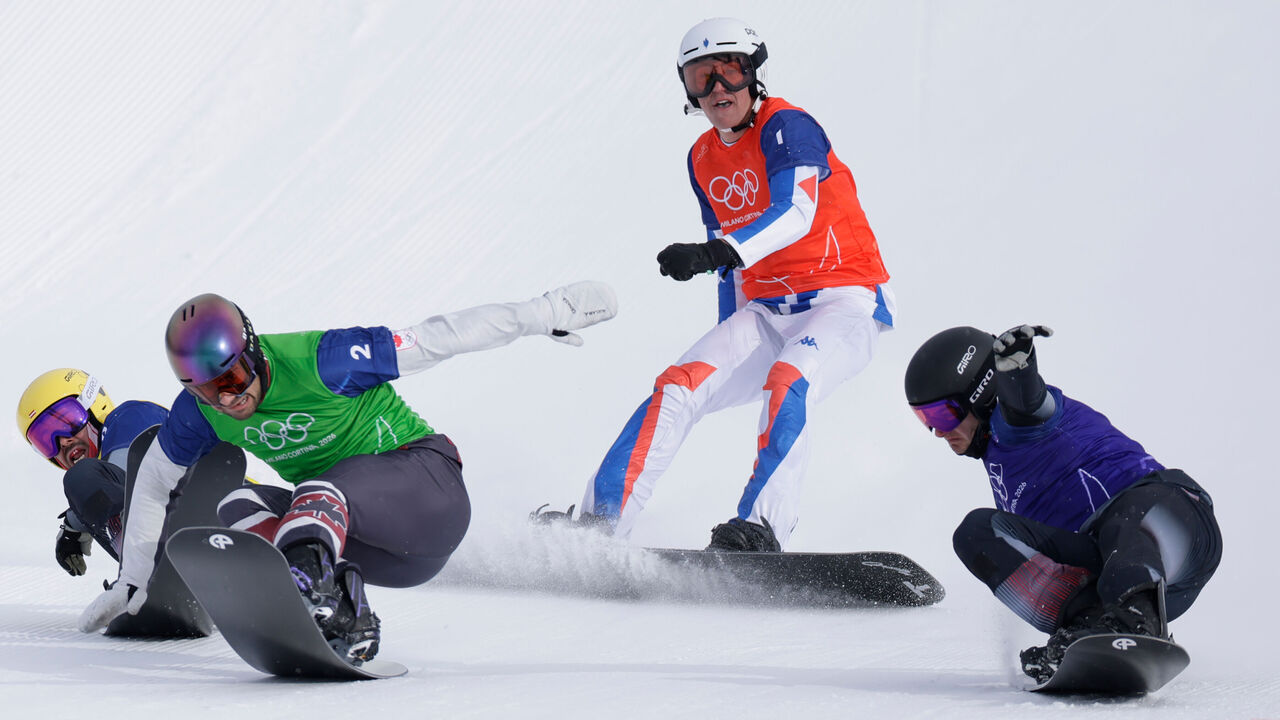
William Dandjinou, a medal favourite in short track, finished off the podium in two events in which he held the lead at some point. Much like snowboard cross, short track speedskating can become an unruly mess as the finish line approaches, and the chaos of that final stretch can undo an otherwise well-executed race. Could Dandjinou have been more careful? Sure, but he was trying to win.
Some of Canada's other below-par performances are harder to attribute to close calls or rotten luck. Rachel Homan, the three-time curling world champion, lost three of her first four matches and has no wiggle room left as she tries to drag her rink out of the round-robin draw. She was also dinged for a rules violation the day after the Canadian men's team of Brad Jacobs was embroiled in controversy for alleged double touching of rocks. It's a perfectly funny curling scandal, with people studying video to see if Marc Kennedy gently poked one of his rocks with an outstretched finger after he had released it.
The Jacobs rink, at least, has played well so far and is living up to its medal-contender status. It would be nice if Canada, long one of the world's curling powers, did not leave Italy with its only curling accomplishment of note being Kennedy's series of F-bombs after being accused of something he appears to have done.
"You can f*** off"
— CBC Olympics (@CBCOlympics) February 13, 2026
Things got TENSE in Canada's win over Sweden in men's curling at #MilanoCortina2026 👀🥌 pic.twitter.com/tseXnxxAj7
Canada's Olympic vibes could get a boost in the coming days. The women's hockey team, after a beatdown at the hands of its American rivals last week, has since had two strong games and got superstar Marie-Philip Poulin back from injury. On the men's side, the Canadians steamrolled their group, avoiding the risk of a quarterfinal showdown with Sweden and (mostly) making everyone forget about the team's goaltending worries for now. The curlers could yet pull out medal finishes.
But these Olympics could also lead to a reckoning. At the past seven Games, starting with Vancouver 2010, the Team Canada story has been one of progress and a funding model that delivered results.
Even before Milan, however, leaders in the country's high-performance sports programs warned that government support has not kept up with the times. That is, funding has remained stable, but costs have risen sharply while other nations have made big investments. Countries like South Korea, Japan, and China that used to be nonfactors at the Winter Games are competing and winning medals in events that Canada used to dominate.
Depending on how the next week goes in Italy, that kind of talk may end up feeling beside the point. Team Canada could still end up lower than expected on the medal table, but a couple of hockey medals - especially gold ones - would do a lot for the national mood.
Scott Stinson is a contributing writer for theScore.