3 narratives that could define the Milan Cortina Olympics
Hands up, everyone who's excited for the big skimo event at the Milan Cortina Olympics.
What's that you say? You've never heard of skimo and assumed that was a typo?
Fair enough. Most people hadn't heard of it until Olympics preview stories started popping up in recent days.
Ski mountaineering, the proper name, is the newest addition to the Olympic program, part of the IOC's perpetual desire to keep fattening the Games with sports that would never have been imagined in ancient Greece. Think of its inclusion as the IOC turning its cap backward in an attempt to blend in with the cool kids.
Surfing, breaking, slopestyle: meet skimo. The event, as you might imagine given the name, involves climbing uphill on skis and then skiing downhill. All of it is timed.
The discipline is, obviously, an odd one. Climbing uphill on skis is the kind of thing you do when you get lost or take a wrong turn while descending. And when such things happen, most people remove their skis for the climbing part. Why would anyone choose to do this for fun?
There's suddenly a new answer to that question: because it might lead to an Olympic medal.
Will it be a hit? Will fans be mostly confused? Will competitors be very tired? (Yes.) It's just one of the storylines to watch at Milan Cortina 2026.
Wide-open spaces
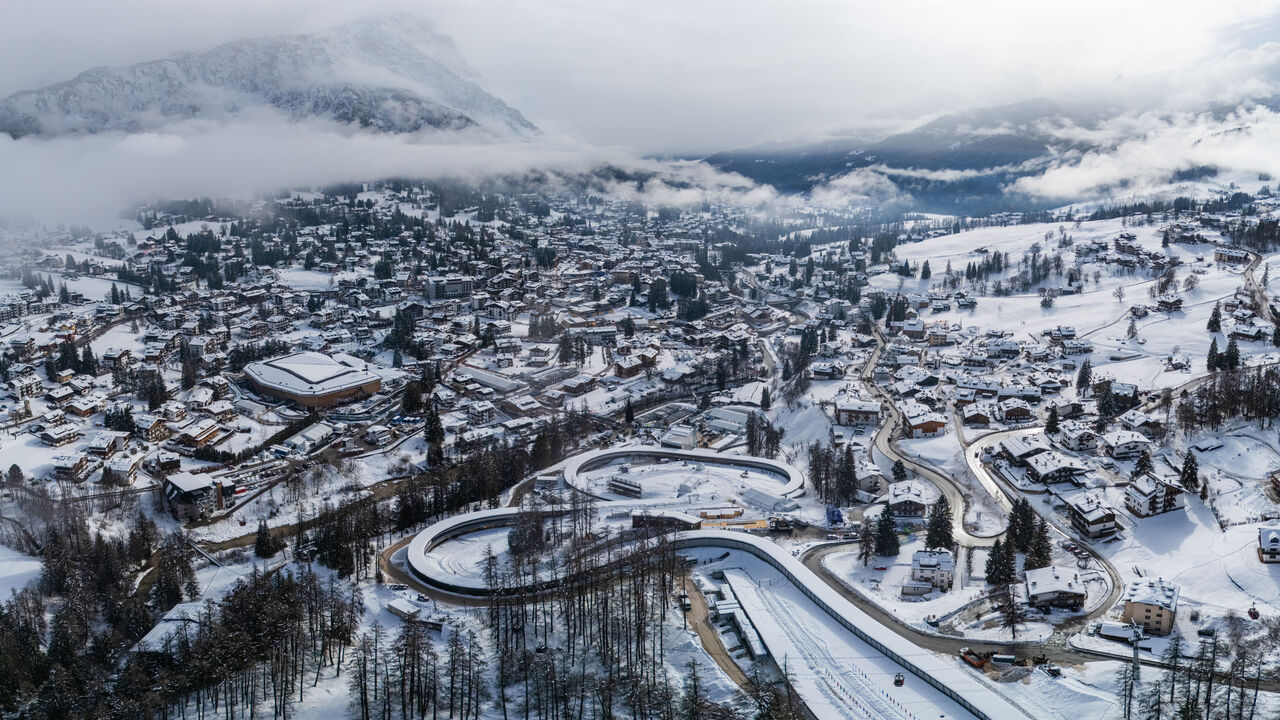
It's standard practice for journalists who arrive at an Olympics to immediately raise concerns about transportation. The events are big and unwieldy, and getting from place to place can often be a nightmare, especially for spectators who don't have access to dedicated Olympic transport. But even in that context, the situation at Milan Cortina is unusual. There are four separate clusters in the northern Italian Alps containing six distinct Olympic Villages. Reporters on the ground have said travel between the clusters is discouraged, which makes sense given the winding Alpine roads. But one of the joys of the Olympics, for visitors and even participants, is the ability to watch, for example, curling one day and Alpine skiing the next. Athletes always talk about the sense of community and togetherness that comes from sharing a living space. The upside of the Milan plan was that it was less costly, and the organizers did well to avoid forcing a large site into somewhere it didn't belong. But hopefully a more siloed Olympics still feels like an Olympics.
Finishing touches
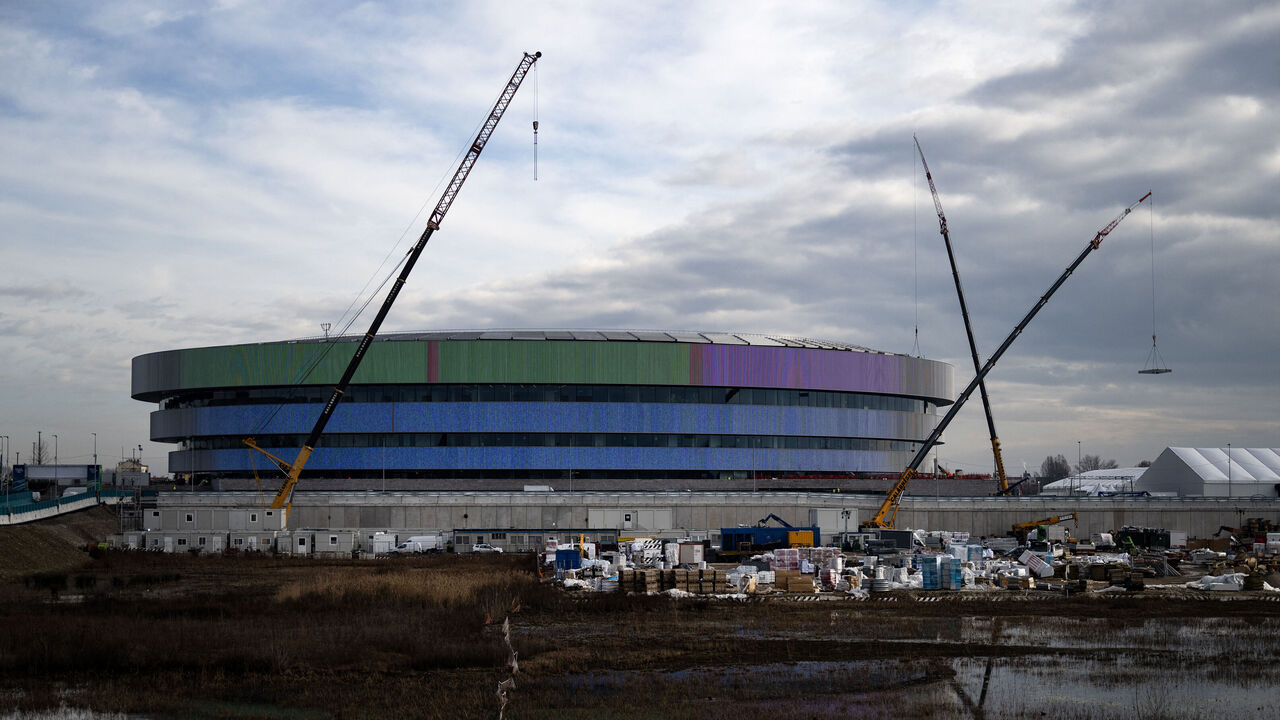
The really good news for Milan Cortina is that the potential venue disasters have been avoided. The sliding center, which local organizers reluctantly rebuilt because the IOC wouldn't let them use existing tracks in a neighboring country, was opened for test events in November. Its completion was extraordinarily late by usual standards but still early enough to get a thumbs-up. The situation at the Santagiulia Ice Hockey Arena was even more alarming, with test events finally taken in January and the ice conditions said to be disastrous. There were questions over whether the NHL would even send its players to Italy if they couldn't be assured that the arena met an acceptable standard. Even with a desperate all-hands push to get the venue ready for competition, the ongoing construction and related mess forced ice-makers to wait until the last minute to prepare the surface. They made their deadline by a matter of hours. Even still, it sounds a little wonky: The ice doesn't have the usual amount of insulation, and players say it's quite loud, with talk of booming noises when they take heavy strides. Intriguing! But the women's tournament began on time Thursday, and everyone will wait and see if the surface can hold up to the busy Olympic schedule.
And ... the sports
As with any Olympics, there are too many interesting events and athletes to cram into a sentence or even a paragraph. Will American Chloe Kim continue her snowboard halfpipe dominance? Can Canada's Jack Crawford repeat his stunning Alpine podium performance from four years ago? Will Eileen Gu, the U.S.-born freestyle skier who became a breakout star in Beijing while competing for China, grab headlines again?
But there is one Olympic event whose outcome can be expected like no other. The Americans and Canadians are all but guaranteed to blast through the women's hockey tournament and meet in the gold-medal game for the latest installment in their remarkable rivalry.
Two things are different this time around. The PWHL began play after Beijing 2022, so many of the Olympians are coming to the tournament straight from an environment where they've been playing professionally with and against their national teammates. (Players from outside North America also compete in the league, raising the possibility that another nation manages a medal-round upset over one of the twin women's hockey powers.)

Secondly, the Americans are on a roll. They won all four games of the fall Rivalry Series against Canada by a combined score of 24-7. Team USA has turned over its roster in recent years, adding an injection of youth, including seven members who are playing in the NCAA. Canada, meanwhile, went with a number of established veterans, some of whom are in their fourth or fifth Olympics. There isn't a single college player on the Canadian roster.
Will youth win out? Will big-game experience make a difference? There's a very good chance we'll find out at the gold-medal game on Feb. 19.
Scott Stinson is a contributing writer for theScore.