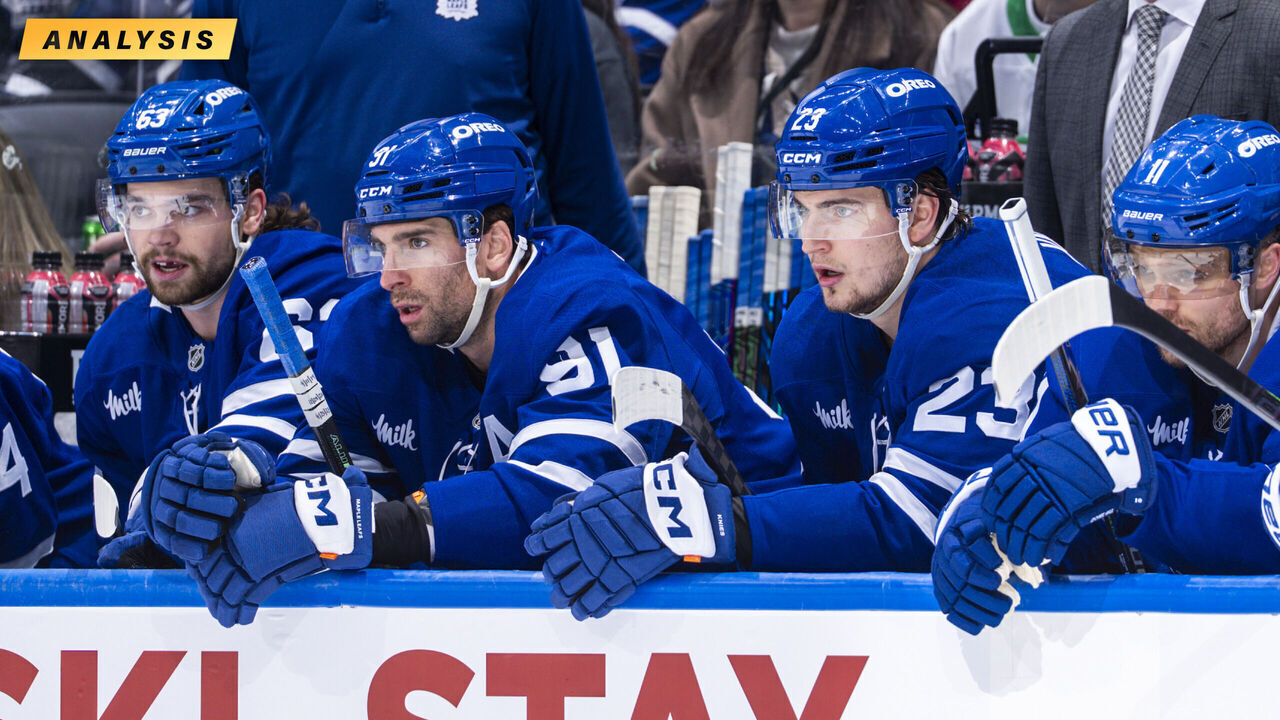
Any hope that former Maple Leafs star winger Mitch Marner would receive a warm welcome in his return to Toronto was squashed last week.
Traveling Leaf fans booed Marner in his home rink during an eventual 6-5 Golden Knights overtime win in Las Vegas, and the boos will continue - presumably in full-throated fashion - Friday night at Scotiabank Arena.
As I wrote over the weekend, the Leafs and Marner are better off without each other. Both parties needed the divorce. Heck, the fans needed relief, too.
So, how's it going without Marner?
The Leafs own a 24-17-9 record and a .570 points percentage 50 games into Craig Berube's second year behind the bench. On pace for 93 points, Toronto currently holds down the ninth spot in the Eastern Conference.
The Leafs finished last season with a 52-26-4 record, a .659 points percentage, 108 points, and top seeding in the Atlantic Division before losing in Round 2 to the Panthers.
Let's try to make sense of the 2025-26 team and its arc.
Welcome back, Peak Matthews
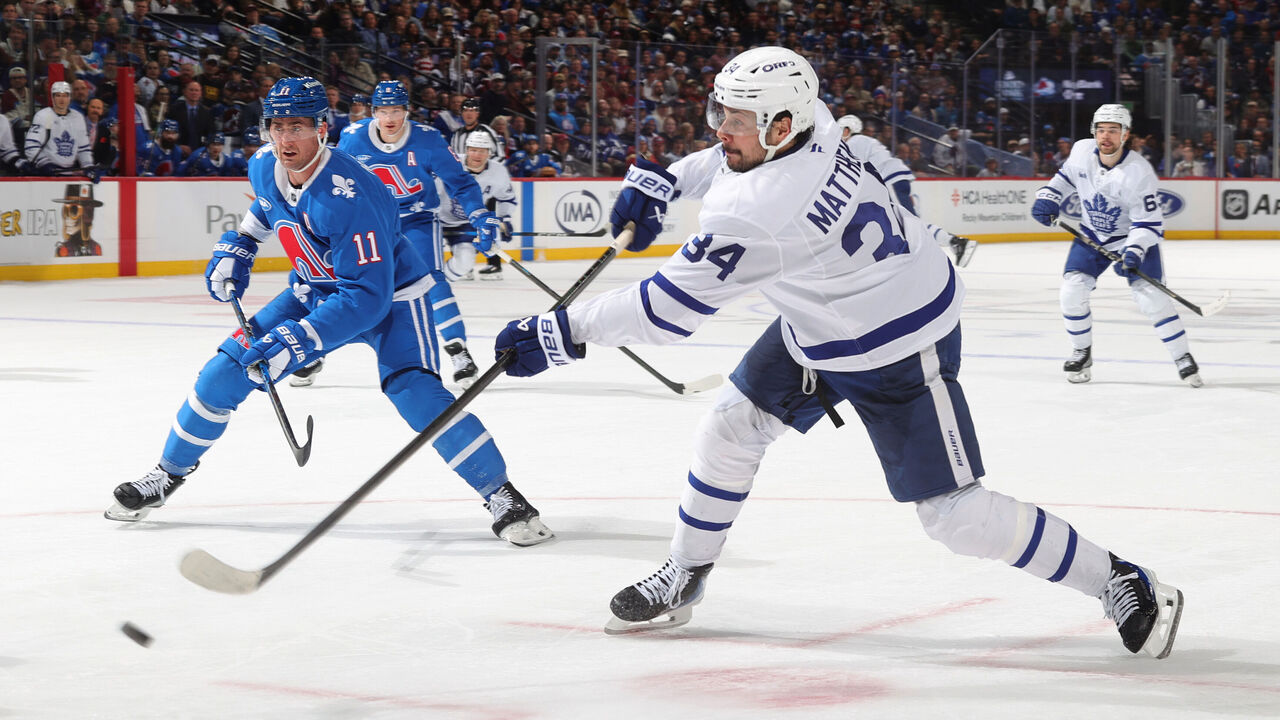
Nobody has scored more goals than Auston Matthews since the Leafs captain made his legendary debut in October 2016. Yet for the majority of 2024-25 and the first three months of this season, Matthews mostly blended in.
He looked sluggish and encumbered - likely stalled by injuries, both nagging and new. His output reflected it: 14 goals and nine assists in his first 31 games. Then the Leafs broke for the holidays. Upon their return, Matthews resumed beating goalies at a superstar rate and hasn't let up since.
Matthews has gone from producing 0.60 goals and 0.74 points per game before the break to 0.85 and 1.46 in 13 post-break games off 11 goals and eight assists.
The points are nice and necessary - Matthews' $13.25-million cap hit trails only Leon Draisaitl's $14 million. But it's the eye test that's the most encouraging. Matthews is back to dominating shifts in a way few NHLers can. The 6-foot-3, 215-pound center is galloping through the neutral zone with purpose, making precise reads and passes, driving to the net with authority, and shooting the puck with his trademark mix of power, grace, and deception.
Sportlogiq data supports the "he's so back" vibe. Here's where Matthews ranks among all NHL forwards in a number of salient per-game metrics:
| Metric | Before break (rank) | After break (rank) |
|---|---|---|
| Expected goals | 0.46 (15th) | 0.63 (4th) |
| Slot passes | 2.00 (34th) | 2.62 (11th) |
| Slot shots | 2.00 (14th) | 3.62 (1st) |
| Rush chances | 1.19 (8th) | 1.77 (2nd) |
| Cycle chances | 1.23 (50th) | 1.69 (18th) |
| Forecheck chances | 0.26 (95th) | 0.54 (11th) |
| Rebound chances | 0.13 (228th) | 0.46 (10th) |
With Marner gone, everything in Leafs land flows downstream from Matthews in a more pronounced way. The performances of fellow core pieces, especially William Nylander, are critical, of course, but Toronto's ceiling is heavily determined by Matthews. The Leafs need him to be extraordinary, even though his linemates have switched from Marner and Matthew Knies to Max Domi and Bobby McMann.
Surely at least some of Matthews' slow start can be attributed to Marner's departure. They formed one of the NHL's top duos for years in part because Marner is an all-world playmaker. He consistently creates advantageous shooting opportunities for linemates while shouldering a heavy defensive load.
Marner starred on both special teams. The penalty kill's been fine in his absence, while the power play's slumped. Simply put, Marner - Toronto's primary puck transporter and in-zone distributor for years - hasn't been adequately replaced. It's led to the worst goals per 60 power-play minutes rating of the Matthews era (5.43) and the December firing of assistant coach Marc Savard.
Questions on blue line, in net
The Leafs have six double-digit goal-scorers and rank seventh in goals per game, despite playing a dump-and-chase style. Generating offense isn't a major problem for them. What is an issue: defense, specifically the suspect personnel.
Toronto's blue line lacks mobility and puck skills. Too often, there's a palpable disconnect between the two defensemen and the three forwards on the ice. The Leafs rank 32nd out of 32 clubs in shot attempts against, shots on goal against, and slot shots against. They also sit 25th in offensive-zone possession time against. Teams that can't defend a lick miss the playoffs.
Brandon Carlo, Simon Benoit, and Philippe Myers have seen more minutes than expected with veteran stud Chris Tanev limited to 11 games by a potential season-ending injury. Oliver Ekman-Larsson - who's enjoying a terrific, team MVP-level campaign - is also currently sidelined.
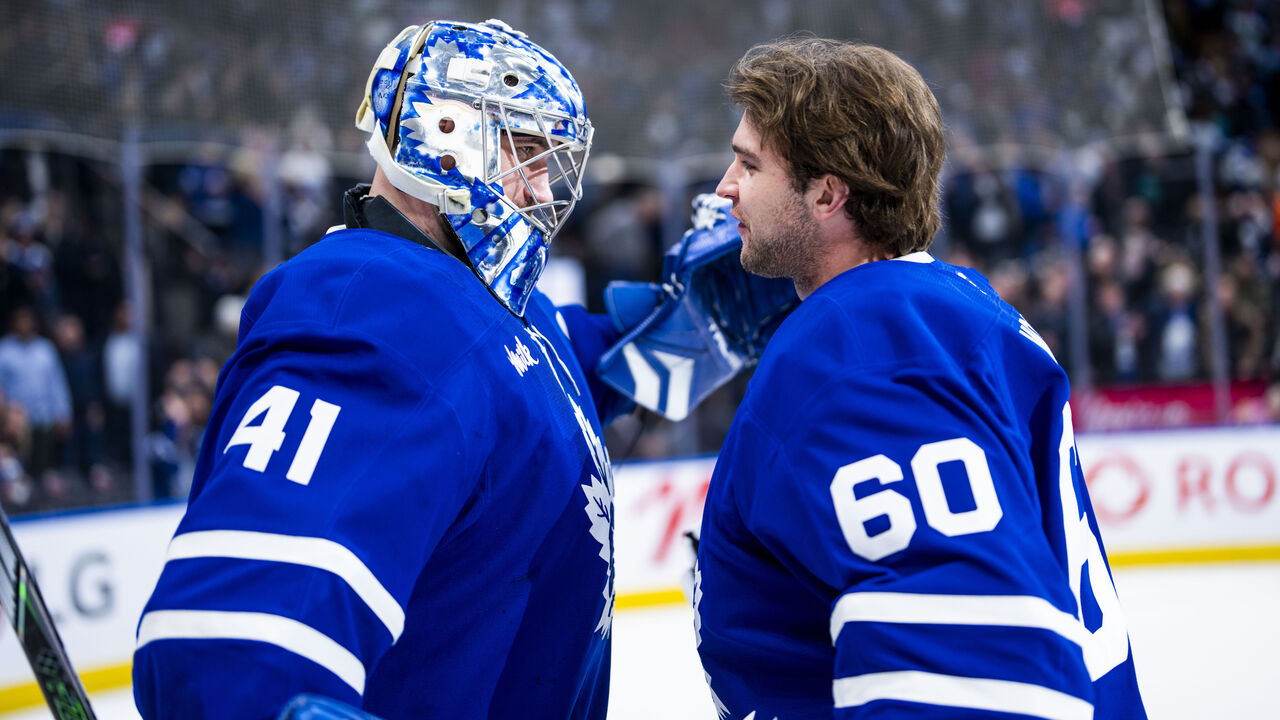
Goaltending, from a strictly puck-stopping perspective, has been quite good. The Leafs are tied for 10th in team save percentage (.897) during a season in which four goalies have started three or more games. The active goalies, Joseph Woll and Dennis Hildeby, are rocking matching .912 rates and similar goals saved above expected tallies (15.1 GSAx for Woll; 16.1 for Hildeby).
Strangely, Woll and Anthony Stolarz, the No. 1 guy on the preseason depth chart, have yet to be available at the same time this season. Woll was on personal leave in the fall, and before he could return, Stolarz went down with an injury.
Goaltending can help paper over a team's defensive shortcomings. The combination of Woll, Hildeby, and Stolarz has done just that, but not to the same degree as last year, when Toronto finished fourth in team save percentage (.905). The Leafs have been on the wrong end of too many comeback wins.
Odds, needs, and the deadline
Nylander, who leads the team with 48 points in 37 games, is out with a groin injury. Top-six winger Matthew Knies has said he's playing through an injury. It feels like the Leafs have run into some seriously poor luck on the health front.
In reality, Toronto is just one of many squads that's been without key pieces for big chunks of time in a weird year for injuries. (The condensed schedule doesn't help). The Leafs sit eighth in cumulative cap hit lost to injury, according to NHL Injury Viz.

Meanwhile, MoneyPuck lists the Leafs' playoff odds at 19.9% ahead of a pre-Olympics stretch of seven games in 12 days. The trade deadline falls six games and 12 days after the conclusion of the men's tournament in Italy.
A right-handed defenseman with offensive juice is the Leafs' biggest present and future need - hence recent reports of interest in the Devils' Dougie Hamilton.
If Toronto loses five of its next seven games, tumbling down the standings, does general manager Brad Treliving spend the Olympic break strategizing for a sell-off? Conversely, would five wins push the executive into buy mode? Then again, a lack of draft capital and prospects (no first-round pick until 2028, no particularly enticing teenagers) makes buying very difficult. Trading away a goalie is easier said than done and would be a big-picture risk.
Option 3: Don't buy or sell - in other words, do little, or "sit."
Based on 50 games, and the fact that the club's top three trade chips (McMann, Scott Laughton, Troy Stecher) are worth re-signing, sitting may be the shrewd move.
This could be a transitional year. No Marner. No playoffs? Reshape the roster in the offseason.
John Matisz is theScore's senior NHL writer. Follow John on Twitter/X (@MatiszJohn) or contact him via email ([email protected]).