Avalanche's secret sauce, Robertson snub reaction, more NHL hot topics
Combining his own perspective with what he's been hearing from those in and around the game, senior NHL writer John Matisz breaks down the hot topics across the hockey landscape.
Avs' secret sauce: Self-awareness
Colorado is skating circles around the other 31 teams at the halfway point of the NHL season. The 30-2-7 Avalanche are on pace to record 141 points, the most in a single campaign. Losing twice in regulation in three months is mind-boggling. Rocking a plus-71 goal differential through 39 games is outrageous.
The Sharks and Blackhawks finished with 52 and 61 points, respectively, last season. The Avalanche, with 43 contests remaining, already have 67 points.
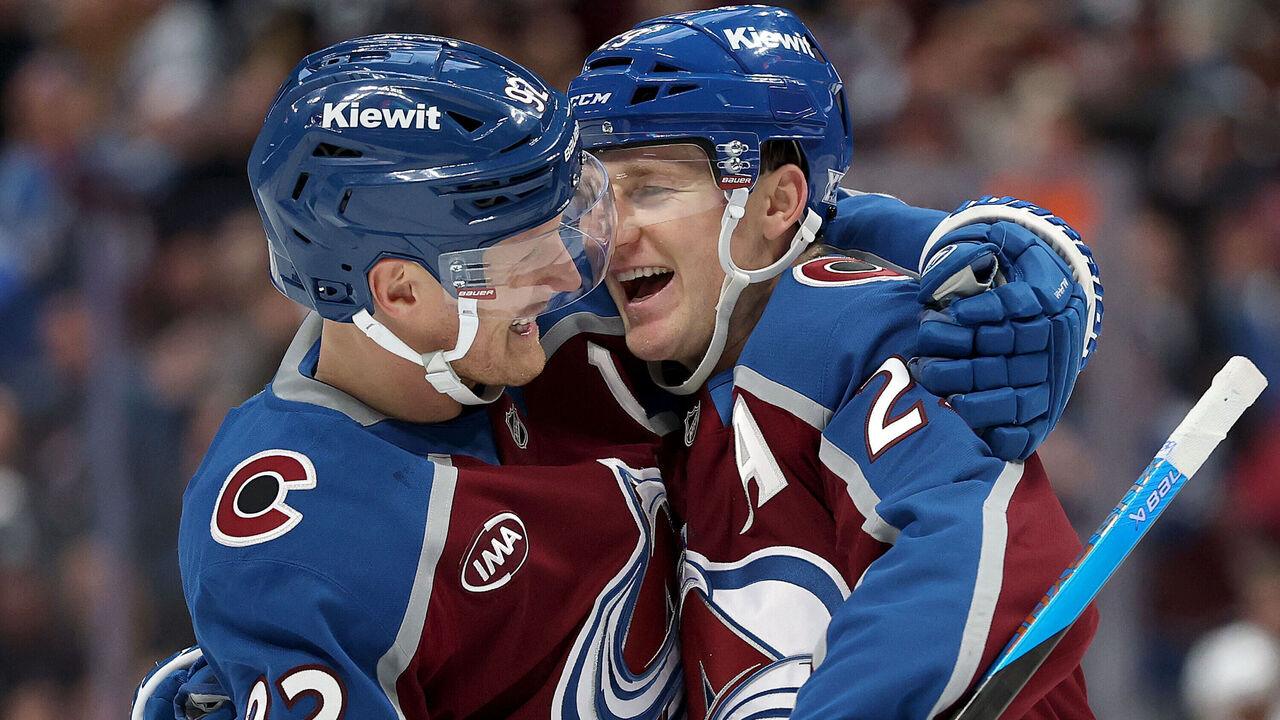
The obnoxious numbers flow downstream from otherworldly performances from Hart Trophy favorite Nathan MacKinnon and Norris Trophy favorite Cale Makar. Ten-year head coach Jared Bednar and veteran captain Gabriel Landeskog form a longstanding secondary layer of the Avalanche foundation. All four were essential to 2022's Stanley Cup, the club's last deep playoff run.
What's amazing about this season's success is that roughly one-third of the roster joined the Avalanche at some point over the past 14 months. Forwards Marty Necas, Brock Nelson, Jack Drury, Gavin Brindley, and Victor Olofsson have all played less than a full season in Denver. Defenseman Brent Burns: 39 games. Goalies Mackenzie Blackwood and Scott Wedgewood: 53 and 43.
Six of those eight players were acquired by Colorado through trade, highlighting just how heavily the front office has leaned on the trade market to shape the roster in recent years.
Twenty-two players have appeared in 10 or more Avs games this season. Of those, only three of them - MacKinnon, Makar, Landeskog - were drafted by Colorado, while just six, including Burns and Olofsson, were reeled in via free agency (and, notably, not a single one of the free-agent deals is burdensome). The remaining 12 players, or 55% of the roster? Trades.

That's a unique breakdown for any NHL team, let alone a dominant one. The key detail: the Avs don't wait until the offseason. They happily pull the trigger on meaningful midseason swaps, namely Devon Toews in fall 2020, Blackwood and Wedgewood in fall 2024, and Necas and Drury last January.
This approach reveals two things about general manager Chris MacFarland and his staff. First, the Avs are self-aware: they're willing to attack roster holes and smart enough to know which parts don't require upgrading. Second, Colorado's front office clearly excels at professional scouting: blending the eye test and sharp statistical analysis, it identifies undervalued or misused talent in other organizations and figures out how to get that player to Denver.
As we learned during the Panthers' back-to-back Cup victories, thoughtful pro scouting can turn a Cup challenger into a Cup winner in the modern NHL.
Snubbed Robertson a 'one-percenter'
The consensus top 10 Olympic roster snubs appear to be Sam Bennett, Connor Bedard, Mark Scheifele, Seth Jarvis, and Matthew Schaefer for Canada; Jason Robertson, Cole Caufield, and Adam Fox for the United States; and Mattias Ekholm and Simon Edvinsson for Sweden.
Nine of them are barely controversial. A large segment of the hockey world might not agree with Bedard's exclusion, for instance, but most people can wrap their heads around why somebody like Bo Horvat was selected instead.
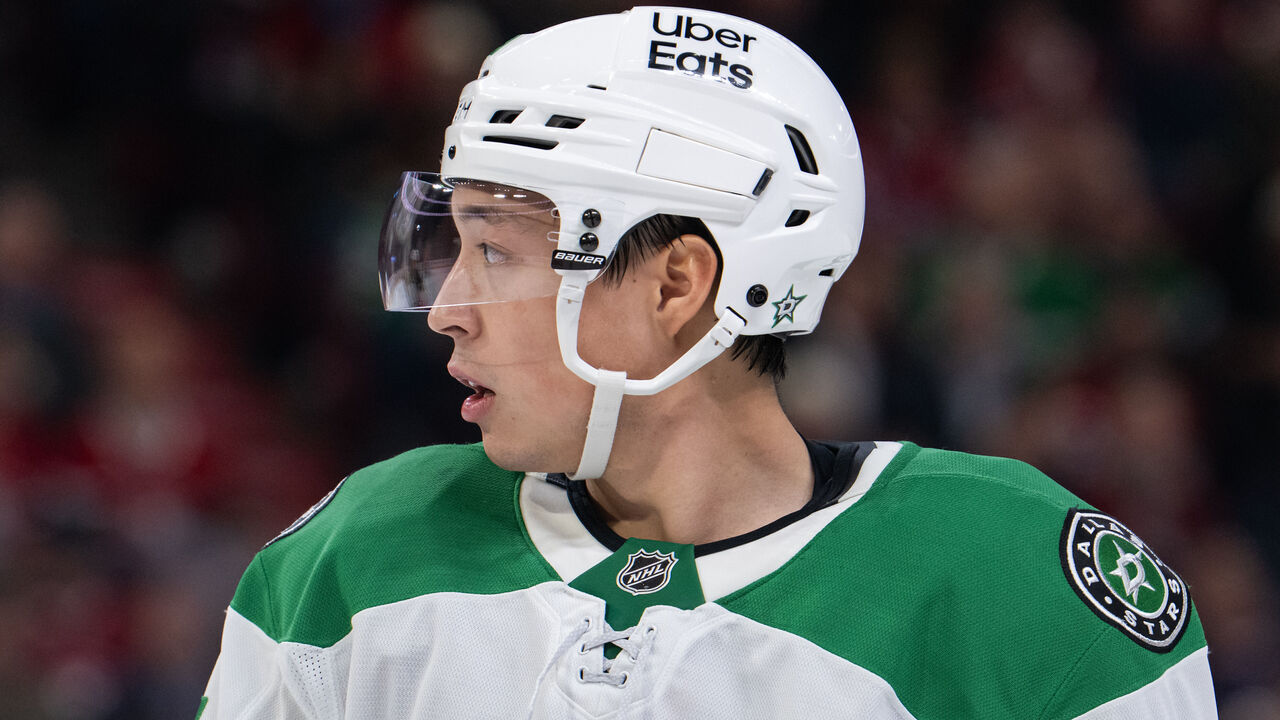
Robertson is the one inexcusable snub, given that at least three inferior forwards made the cut (no offense to Vincent Trocheck, J.T. Miller, and Brock Nelson).
Robertson, a dual-threat winger for the Stars, is tied for eighth in NHL scoring with an American-high 48 points. The two-time 40-goal scorer has finished the past three seasons with point totals of 80, 80, and 109. He has a history of playoff production, is competent defensively, and is by no means small (6-foot-3, 204 pounds) or afraid of physical contact. He can play both wings.
"That's a tough one. Really tough. I honestly don't know how Robertson isn't on your team," one NHL assistant coach told theScore. "He's not the biggest or strongest player out there, but he has this unbelievable ability to put pucks in the net in an instant. It's hard to pass up on natural scorers when it's such a short tournament. Robertson is elite. He's a one-percenter in my books."
Midseason Calder Trophy ballot
This year's rookie class generated plenty of preseason hype, and it hasn't disappointed. There could be an elite goalie, two elite defensemen, and two elite wingers. Plus, another handful of players have fascinating upside cases.
The NHL announces three finalists for the Calder Trophy every spring, but members of the Professional Hockey Writers Association fill out a five-player ballot. Here's who I'd vote for, if ballots were due Saturday morning:
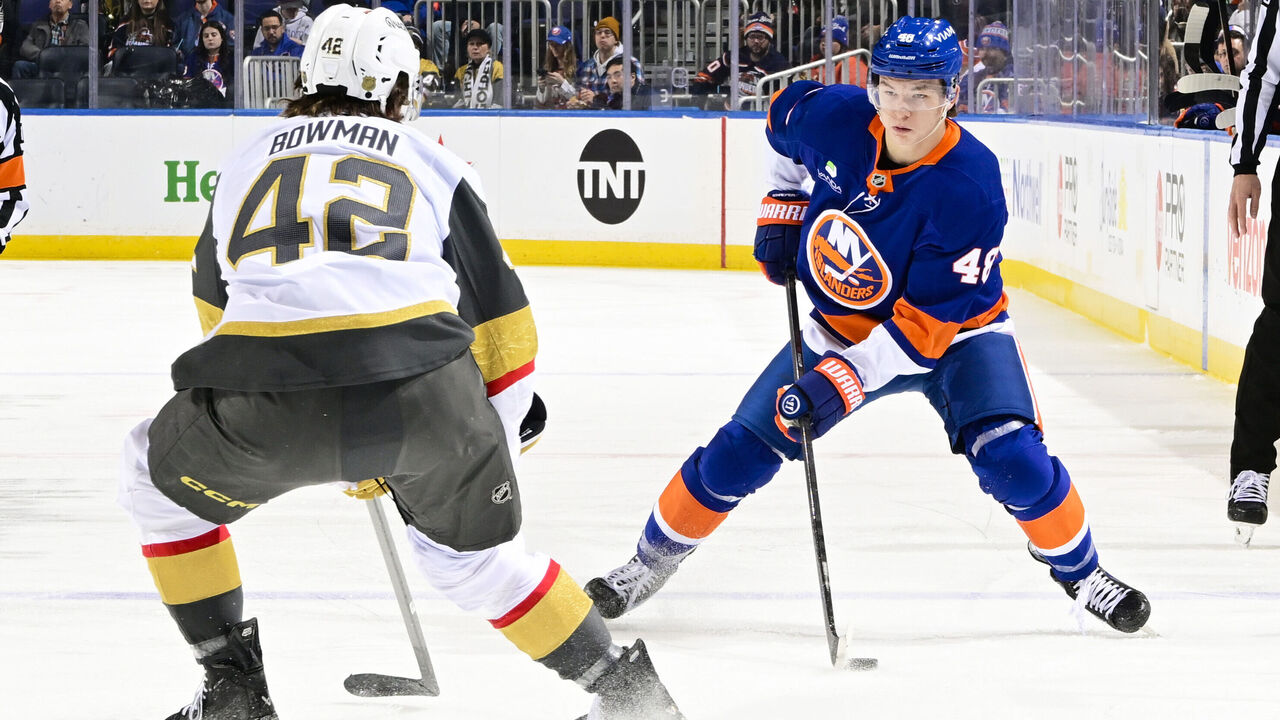
1. Matthew Schaefer: Controls games with top-tier skating ability and smarts. Can hang defensively with high-end opponents. 26 points in 41 contests. Plus-14 penalty differential. Islanders are up 34-22 at five-on-five with the 18-year-old defenseman on the ice, down 48-36 with him off it.
2. Jesper Wallstedt: Plus-17 goals saved above expected and .931 save percentage. Fantastic positioning and rebound control for a young goalie. Wild are 11-2-3 with the 6-foot-3 "Wall of St. Paul" between the pipes.
3. Beckett Sennecke: Rookie leader in goals (13), primary points (27), and even-strength points (24). Second in all-situations points (31). Ducks own a 50.5% expected goals share in the power forward's five-on-five minutes.
4. Ivan Demidov: Rookie leader in points. Ankle- and game-breaking winger.
5. Alex Nikishin: Strong underlying numbers. Future first-pair defenseman.
Defeating the 'yips' in NHL spotlight
When a golfer continually falters on the putting green, we wonder if they have the yips. When a baseball pitcher loses command for multiple weeks, yep, the athlete must be feeling overwhelming nervous tension during the game. The yips.
The word "yips" is rarely uttered in hockey circles, yet NHLers sometimes wrestle with them. Consider an offensively gifted forward mired in a prolonged slump. He's probably overthinking his positioning, shot selection, and release - or gripping his stick too tightly, as the cliche goes. It's as if the player's brain and body have become strangers to each other. Frustration mounts. Confidence plummets.
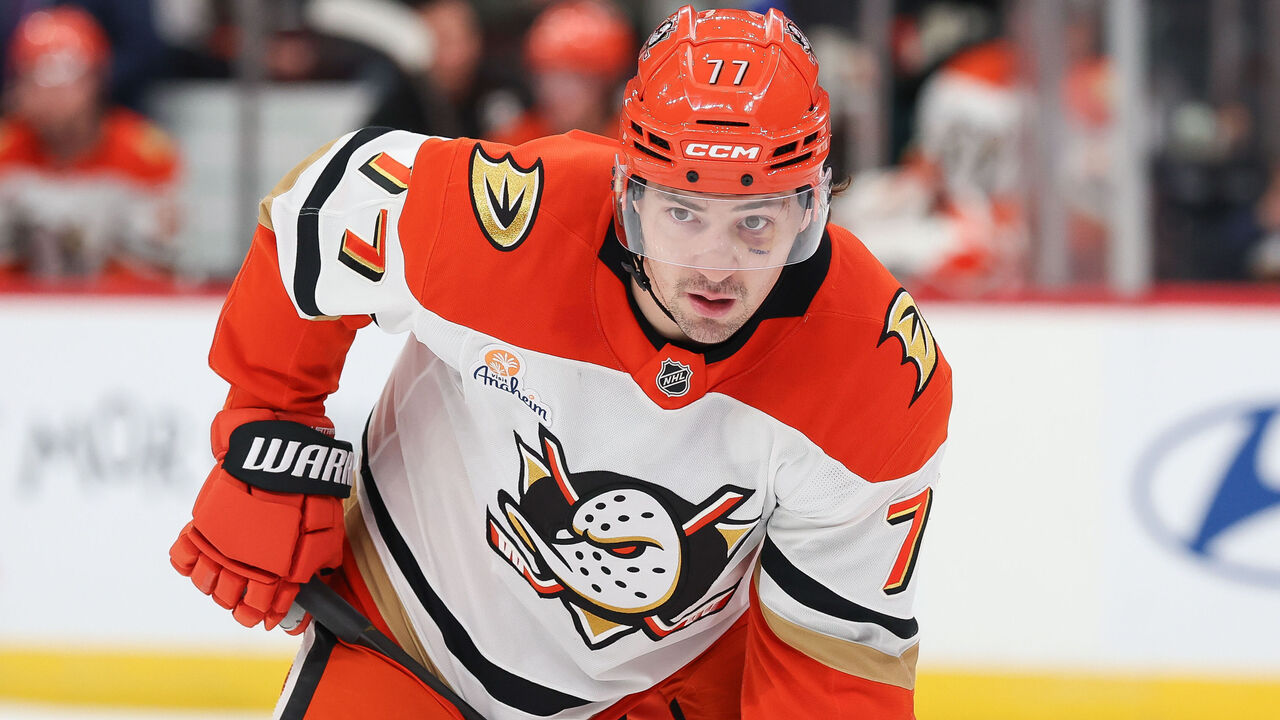
It's safe to assume Anaheim's Frank Vatrano and Columbus' Kent Johnson are praying the back half of the 2025-26 campaign is more fruitful than the front.
Vatrano, 31, has eclipsed 20 goals in a season five times, including a career-high 37 in 2023-24. However, he'll be lucky to hit double digits this year. Vatrano's shooting percentage has plummeted to 4.4% (three goals on 68 shots), well below his career average of 10.6%. Adding to his issues, Vatrano's nightly ice time has dropped to just 12:21 from 17:33 last season. It gets worse: The former All-Star suffered a shoulder injury in late December and is expected to be shelved until early to mid-February.
Johnson, a skilled and crafty winger brimming with potential, has recorded three goals in 38 games, posting a 5.3% shooting percentage. The 23-year-old Blue Jacket finds himself on pace for six goals in 80 contests after breaking out for 24 in 68 last year.
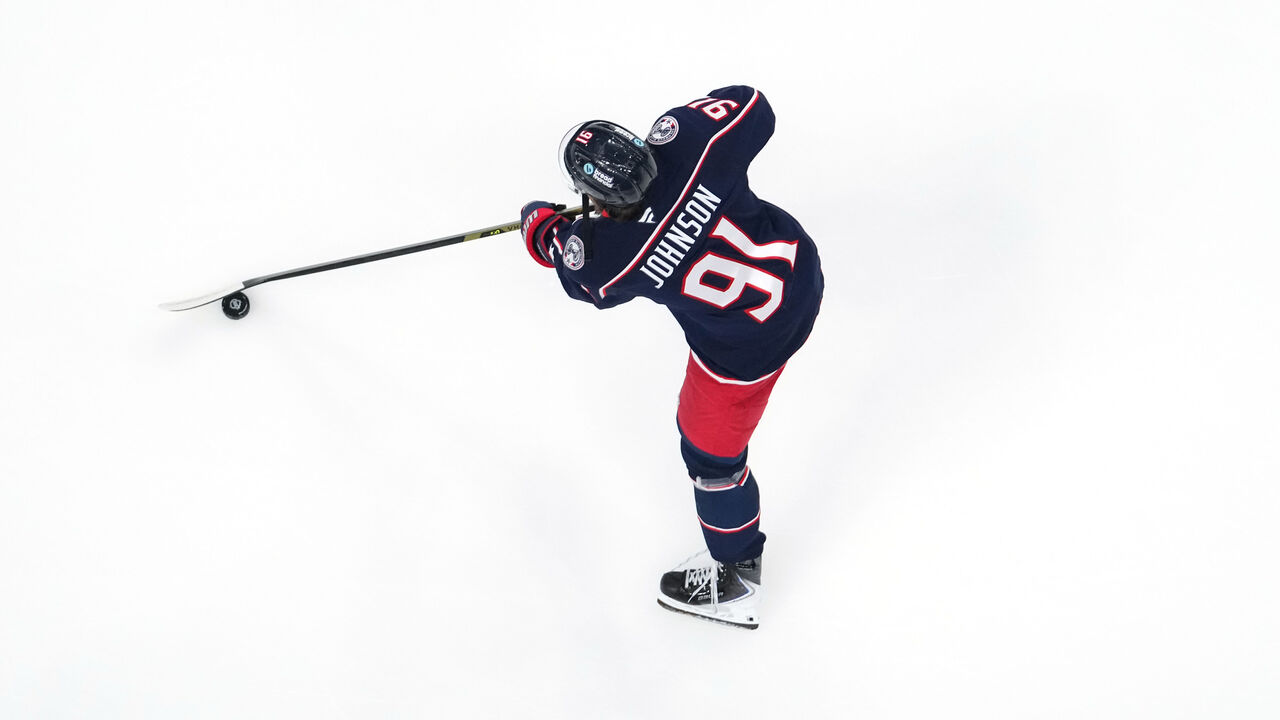
Other notable forwards fighting it: Phillip Danault (zero goals in 34 games), Brandon Saad (one goal in 36 games), and Alex Killorn (two goals in 41).
How do NHLers defeat the yips? A few forwards offered insight in fall 2024.
Ottawa's Shane Pinto: "There's always that five- or 10-game stretch where you just have no idea. It's not like you don't know how to play, you just can't find your game. ... I try to go back to simplifying, get back to playing good defense, which will lead to offense. You try to get back to the basics. Everyone goes through it. Even if you're an elite player, you go through it."
Philadelphia's Owen Tippett: "One of the things I've always said is if you're getting (quality) scoring chances, you're still on pace. Your luck will turn. But if you're not getting chances, that's when you've got to start to worry a bit."
Nashville's Filip Forsberg: "You'd like to say you learn how to handle (the yips), but then whenever it happens and comes again, it's hard. Especially when you're a young player. You want to produce, and you focus so much on that. ... My game has evolved a lot since I first came into the league. I'm not just producing now. Playing with guys like Ryan O'Reilly and Gus Nyquist, and seeing what they do off the puck, opens your eyes. Especially O'Reilly, the way he plays and competes (is instructive). That's someone I've learned a ton from, seeing the bigger picture and trying to contribute in every way I can."
Thin margin for error in Buffalo
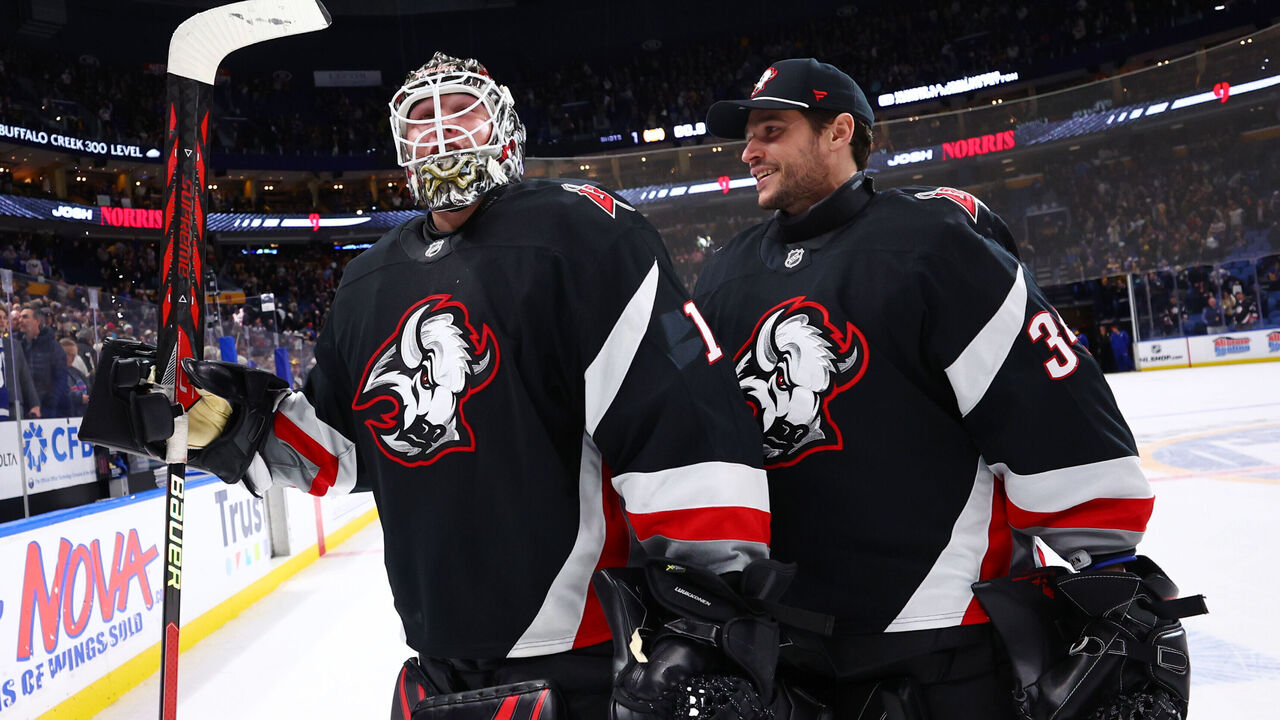
The Sabres have scaled the Eastern Conference standings, maneuvering from last place to the second wild card thanks to 10 straight victories. A win in Columbus on Saturday would reset the franchise record for longest streak.
Offensive engine Tage Thompson is humming (seven goals and seven assists). Goalies Alex Lyon and Ukko-Pekka Luukkonen are in a groove as a tandem (or were, prior to Lyon suffering an injury Monday). Feisty winger Zach Benson has started to fill the net (first four goals of the season). And Noah Ostlund and Josh Doan continue to impress as young two-way forwards.
It's awesome to see such positivity around a franchise known for its doom-and-gloom. All of that said ... man, did the 21-14-4 Sabres dig themselves a huge hole early on. Their playoff odds are relatively low (53.6% on MoneyPuck) despite the hot stretch, in part because they own one of the hardest remaining schedules, according to Tankathon. Buffalo could string together a respectable .550 points percentage in its final 43 games and still miss the postseason for a 15th straight year with a point total of 93.
What's the ideal number of games?
Reader ddfklf79784 recently asked about the length of the regular season:
Would fewer games make the league more interesting? 82 is too many, with one game not holding enough relevance. How about 41 games?
Shortening the season would undoubtedly make the league more interesting. In a perfect world, the game count drops to the 65-70 range to ratchet up the significance of each tilt yet maintain roughly the same weekly cadence.
OK, back to reality. The NHL is moving to an 84-game season in 2026-27. The change, which will increase revenue and shorten the preseason, is part of the new collective bargaining agreement between the league and the players' union.
The hypothetical here is fascinating, so I asked three NHLers about it. If the league started from scratch today, what's the ideal number of games?
One multi-time All-Star forward's mind darted to the preseason. Eliminate it entirely, he said. The rationale: NHLers can't really half-ass effort, so better to have two points on the line if someone's going to break a bone blocking a shot. Also, the toughest part of the 82-game schedule is winning the second game of a back-to-back; being tired while the opposition is rested is a massive disadvantage in a tight league. What if most, if not all, back-to-backs doubled as home-and-homes? Neither team would hold the health edge.
One top-four defenseman acknowledged the 82-game grind but strongly believes playing fewer contests would be a major fumble. Revenue is tied closely to games, and the owners and players split hockey-related revenue. Neither party wants to deliberately make less money. Bring on more.
Another top-four D-man more or less shrugged. Yes, 82 is a big number, especially in a season in which a three-week Olympic break has created a condensed schedule. His body hurts. However, he said with a wide grin, NHLers are hockey players, and players want to play games, not practice.
What do you want to know, hockey fans?
There are three ways to submit a question for future NHL Inbox editions.
- Comment on this article in theScore app
- Email John at [email protected]
- Send John a message on X (@matiszjohn)