One of the strangest facts in professional sports is that part-timers officiate the National Football League.
An entity so big that it dwarfs the influence of all its rival leagues combined and essentially props up the entire broadcast TV industry on its own has moonlighters in some of its most critical, visible roles.
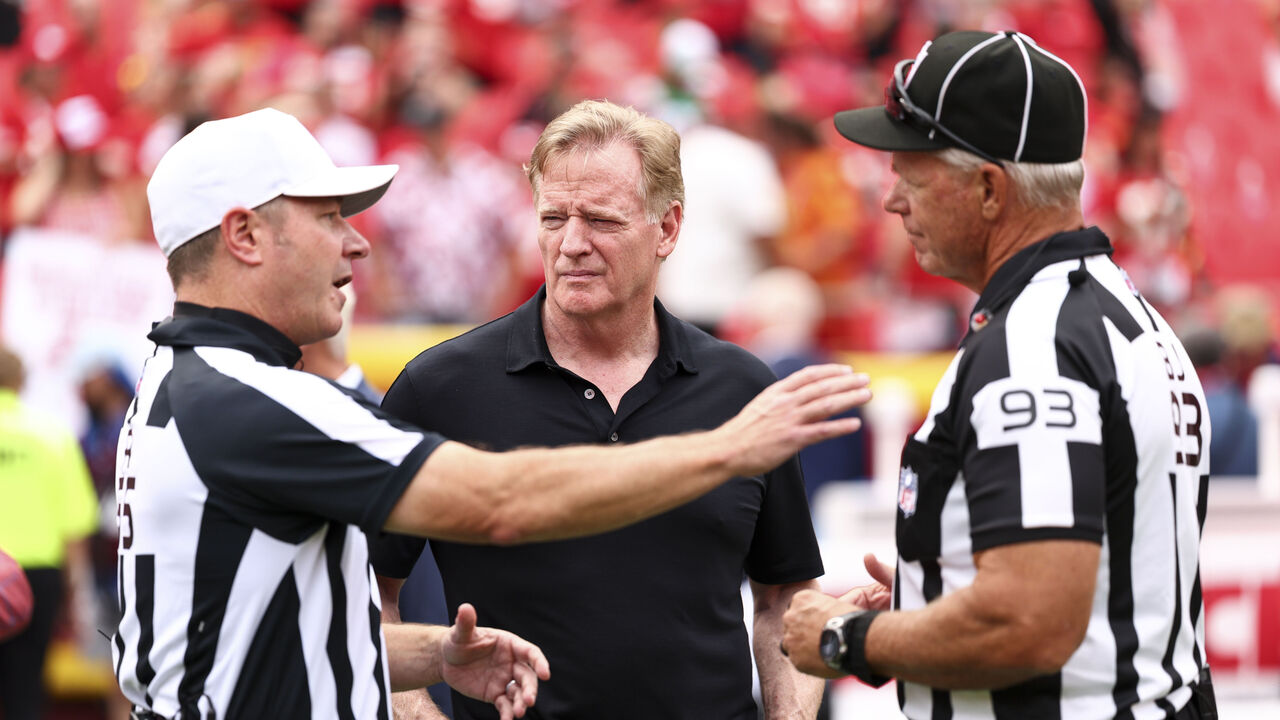
This seems unlikely to end anytime soon. The NFL is at an impasse with its referees, whose collective bargaining agreement with the league expires at the end of May. The two sides are evidently far enough apart that the league has already begun working on contingencies, which reportedly includes hiring and training a new batch of on-field officials to work games beginning in training camp.
That's right: replacement refs.
How has it come to this again?
It's tempting to assume the NFL, which has signed $13 billion in contracts just for its American TV rights, is nickel-and-diming its officials (again) in negotiations. But the issues are a little more complicated.
The league is said to want job performance to have a greater impact on which officials are given postseason assignments, for example, and to require under-performing officials to work extra games in the minor leagues for additional training.
The NFL Referees Association (NFLRA) has reportedly pushed back on those demands. Officials also want to retain their part-time status because most have careers outside of football. They make, on average, $350,000 annually officiating NFL games while also holding down other jobs. It's nice work if you can get it.
However, that system feels increasingly unsustainable. Relying on part-time officials might have made sense when the NFL played the overwhelming majority of its games on Sunday afternoons. Even just a few decades ago, being an official meant showing up on a Sunday and putting in a few hours, not unlike what might be expected of a referee in a recreational league.
But today's NFL isn't just exponentially more wealthy, it's growing and expanding in ways unimaginable not that long ago. Teams play 17 games in a regular season now, and it's widely assumed there will be 18 within a few years. Commissioner Roger Goodell has repeatedly said he wants as many as 16 international games on the schedule each season, and the league has long since been moving away from its Sunday tradition.
Thursday Night Football has become a year-round fixture, despite universal acceptance that those contests increase injury risk and are often sloppy messes. And the NFL keeps looking to add extra broadcast windows wherever possible: first Black Friday, then Christmas Day, and the 2026 season will begin on a Wednesday, followed, of course, by a Thursday game. There are suspicions that the league will try to schedule games regularly on Tuesdays and Wednesdays in the coming campaigns, selling them as extra content to streaming services while leaving just enough for Sunday afternoon on the broadcast networks.
The NFL might see all this as just creating extra content, but it also needs officiating crews to blow the whistles and throw the flags. Is it realistic to still have part-time referees when the games could be any day of the week and sometimes anywhere in the world?
At this point, it's probably worth noting that any differences between the league and its referees in negotiations could almost certainly be resolved with more money. There has to be a number that would prompt officials to accept full-time work and no longer treat maintaining order on an NFL field as a side hustle.
Some back-of-napkin math suggests that, at a $350,000 salary for the 121 officials the NFL employs to call games, the league pays just over $42.3 million to its referees. That's a relative pittance in a league where teams sometimes pay multiple times that amount to get rid of a player and the remaining guaranteed money on his contract. See: Tagovailoa, Tua.
The solution seems obvious: give the refs a giant one-time raise, make them full-time employees, and the biggest sports league in North America by a mile can roll on, popular as ever.
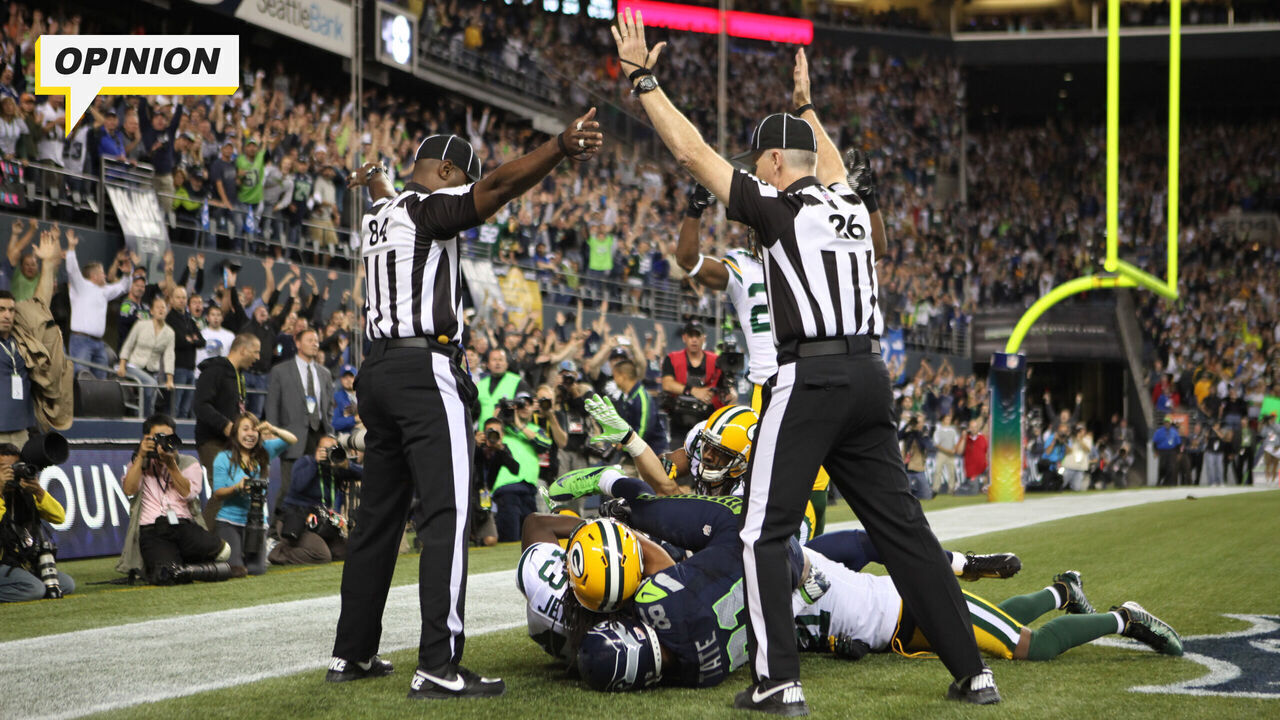
Some owners might bristle at the giant raise part, especially since the league seems to think it can draft an entirely new officiating workforce from the college and semi-pro ranks. But honestly, what are we doing here? Is the league really going to open its season in September with an officiating crew with zero NFL experience? Doesn't it remember what happened the last time it went this route and had to scramble in 2012 to settle with the referees after three error-strewn weeks by replacement officials?
Did the NFL not learn anything from the infamous "Fail Mary" play?
Evidently not, since it appears willing to try again.
Scott Stinson is a contributing writer for theScore.