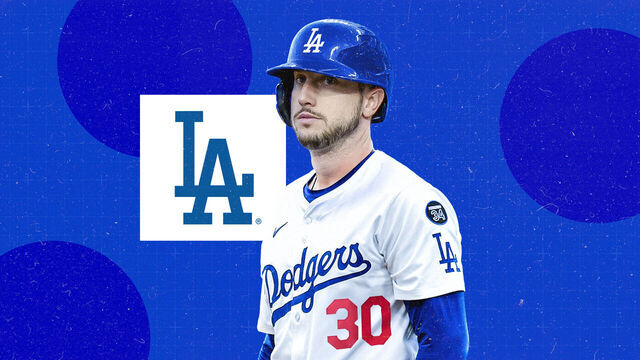
An alternate version of the 2025 World Series would cast this week's Kyle Tucker news in a different light.
What if Isiah Kiner-Falefa had a bigger lead at third base in Game 7? What if Addison Barger's shot to the wall in Game 6 hadn't wedged itself between the padding and the warning track? What if Yoshinobu Yamamoto wasn't the only pitcher in the world who doesn't suffer arm fatigue?
If any of those things turn out differently, the Toronto Blue Jays are probably world champions, and the postscript about the Los Angeles Dodgers declares they were undone by a few too many holes in their lineup.
In that circumstance, the Dodgers signing baseball's top free agent to a reported four-year, $240-million contract would still be a case of the rich getting richer - but at least it would also represent a losing team addressing a weakness.
Instead, signing Tucker feels like overkill. The two-time defending champions swooped in to grab the best player on the market simply because they could.
The contract is a tremendous overpay in annual value and gives Tucker opt-outs after two and three years. Only one team in Major League Baseball would consider such a deal. It's further proof of the sport's relatively new reality: There are the Dodgers, and then there's everyone else.
The Tucker contract doesn't have to break baseball, but it probably will.
Owners who already favored forcing a work stoppage next winter in hopes of installing a salary cap will be emboldened by the Dodgers yet again making a mockery of the existing "competitive balance" tax system. It's another L.A. contract with significant deferrals, reducing the Dodgers' (already massive) present-day luxury-tax bill but extending their real-world contractual obligations many years into the future. Few teams are confident enough about their long-term profitability to consider such a thing.
Other teams will insist the Dodgers must be reined in. Critics who like to complain the franchise is just buying World Series titles can point to those back-to-back banners - and three championships in five seasons.
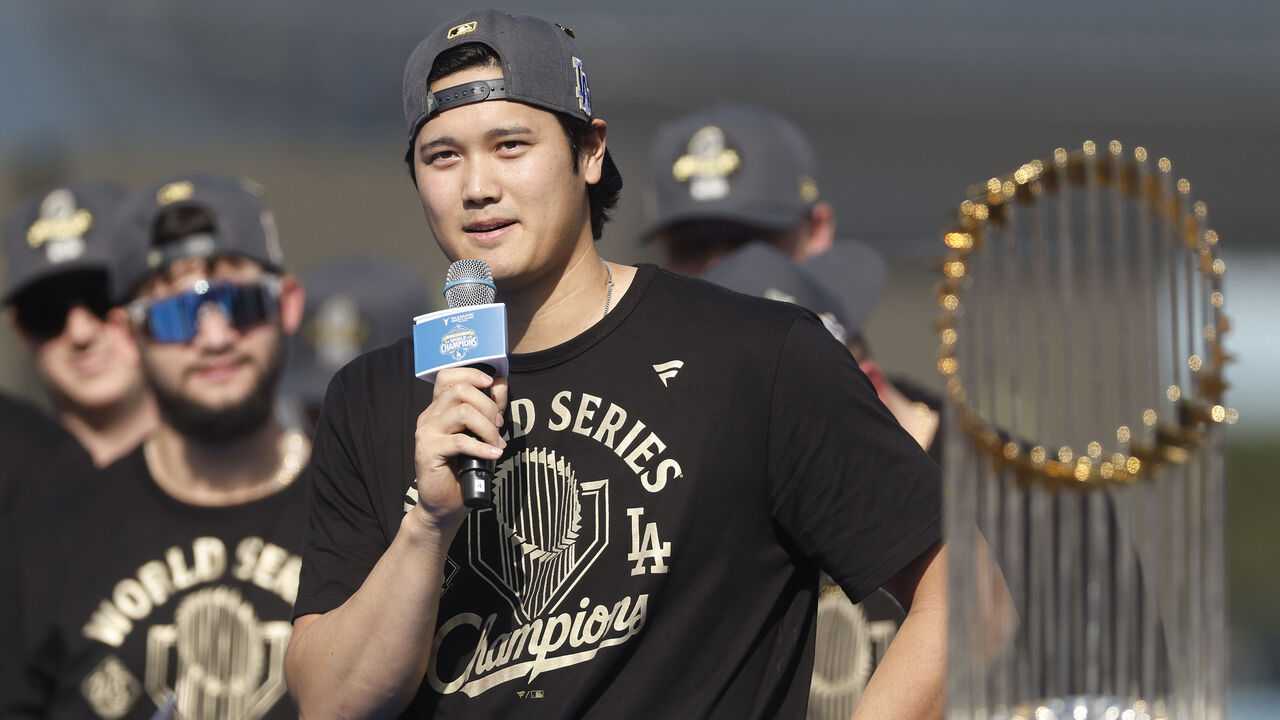
But it's long been the case that a significant number of clubs in Major League Baseball - around 5-10 in any given year - aren't really trying to compete, and not just in the smallest markets. And for all of the Dodgers' largesse, they are far from an unstoppable force. They had the fifth-most regular-season wins in 2025 - behind the frugal Brewers, among others. Of the 12 participants in the last six World Series, only the Dodgers (three times) and the Houston Astros (twice) have made multiple appearances. The inherent randomness of a baseball postseason is undefeated.
That's not to say the Dodgers aren't unique. They've built up so much organizational depth, especially on the pitching side, that they could allow several starters to miss significant time in 2025, still make the playoffs, and then unleash a rested rotation stocked with aces who would lead just about any other staff.
Does that make them unbeatable? It does not, as the Blue Jays came so close to proving. But it does force everyone else to spend more, or spend more wisely, or some combination of the two. The Dodgers are eliminating the rest of baseball's room for error.
That's why the clamor for a salary cap will be louder than ever. If the best-run teams can't spend freely, that gives poorly run franchises a better chance.
Will it work? Not necessarily. Small-market teams in leagues with strict salary controls still lose players to more attractive destinations. The NBA introduced a de-facto hard cap in its last CBA that's incentivized teams to trade homegrown stars - the very guys "cost certainty" was supposed to make it easier to keep - before their salary becomes too unwieldy. The NHL's salary cap has handed an unplanned advantage to teams in Florida, of all places, where warm weather and the lack of state tax have proven attractive to free agents.
But none of that is likely to matter once baseball's looming labor war heats up. Too many owners will point to the Dodgers and say they can't possibly be expected to compete with that (even though several teams just did).
The Dodgers can't be blamed for successfully exploiting MLB's current rules. They figured out a way to use the system to their advantage. But they've also almost certainly ensured that those rules, and that system, will change.
Scott Stinson is a contributing writer for theScore.